


Behavioral Health: Conditions, Symptoms and Treatment
Behavioral health covers your mental, emotional and behavioral well-being, including how you think, feel and cope. About 23% of US adults have a mental illness in a given year, and about half of them receive treatment. Common conditions include anxiety disorders, depression and post-traumatic stress disorder. Symptoms can include persistent worry, a sad or empty mood, fatigue, trouble concentrating, sleep or appetite changes, irritability and withdrawal from activities you enjoy. Stress, biology, life experiences and lifestyle all play a part. Talk therapy, medication or both help many people, and everyday habits support recovery. Call or text 988 in a crisis.

Your whole story, heard in full
Care that works with your team
In person or virtual visits
What Is Behavioral Health?
Behavioral health is a broad term for your mental, emotional and behavioral well-being. It includes how you think, feel and act, how you handle stress, how you relate to other people and how you make choices. When something disrupts that balance, it can touch your sleep, your energy, your work, your relationships and your physical health.
Mental health is emotional, psychological and social well-being, and it can be affected by biology, life experiences, family history and lifestyle. These conditions are common, treatable and nothing to be ashamed of. This page walks through the most common ones, what they feel like and how they are treated.
How Common Are Mental Health Conditions?
Very common. In 2022, 23.1% of US adults, about 59.3 million people, had a mental illness, which NIMH defines as a mental, behavioral or emotional disorder. About 6.0% of adults, or 15.4 million people, had a serious mental illness that substantially limits one or more major life activities. About half of adults with a mental illness (50.6%) received mental health treatment in the past year.
Signs You May Need Support
Warning signs include changes in eating or sleeping habits, pulling away from activities you enjoy, low energy, feeling numb or hopeless, unexplained aches and pains, and using more tobacco, alcohol or drugs than usual. Unusual confusion, anger, worry or fear, severe mood swings and trouble with daily tasks such as work, school or caring for children are also signs. If you suspect a problem, getting help early is a good idea, and your primary care provider is a good place to start.
Common Behavioral Health Conditions
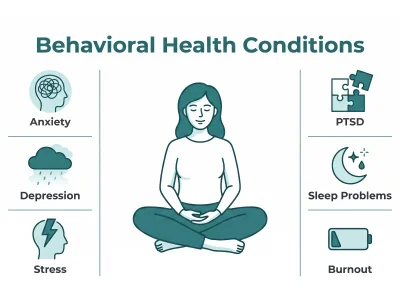
These conditions take many forms. Three of the most common are anxiety disorders, depression and post-traumatic stress disorder. Others include sleep problems, burnout and the emotional strain of living with a long-term illness.
- Anxiety disorders
- Depression
- Post-traumatic stress disorder (PTSD)
- Stress-related symptoms
- Sleep problems and burnout
- Mood changes linked to long-term illness
Anxiety Symptoms
Feeling anxious is normal. Anxiety disorders involve more than occasional worry: the anxiety does not go away, is felt in many situations and can get worse over time. Types include generalized anxiety disorder, panic disorder, social anxiety disorder and phobia-related disorders. Symptoms can interfere with work, school and relationships, and in severe cases a person may feel intense fear in common situations, avoid social encounters or refuse to leave home. Anxiety can also show up in the body, with headaches, body pain, tension and lost sleep.
Depression Symptoms
Depression is more than ordinary sadness. It causes severe symptoms that affect how you feel, think and handle daily life, and it can affect anyone. A diagnosis generally requires symptoms most of the day, nearly every day, for at least 2 weeks. Common symptoms include:
- A persistent sad, anxious or “empty” mood
- Hopelessness, guilt or worthlessness
- Fatigue or low energy
- Trouble concentrating or making decisions
- Sleep or appetite changes
- Loss of interest in activities you used to enjoy
- Unexplained aches or digestive problems
- Thoughts of death or suicide
Depression often occurs with other conditions, such as diabetes, cancer, heart disease or chronic pain, and some medications can contribute to symptoms.
PTSD Symptoms
Fear after a traumatic event is normal, and most people recover from their reactions over time. When symptoms continue, the diagnosis may be post-traumatic stress disorder. About 6 in 100 people will have PTSD at some point in their lives, and women are more likely than men to develop it. Symptoms fall into four groups: re-experiencing, such as flashbacks or recurring memories and dreams, avoidance of reminders, arousal and reactivity, such as being easily startled or having trouble sleeping, and negative changes in thoughts and mood. Symptoms usually start within 3 months of the event but can appear later. Our trauma page covers this topic in depth.
What Affects Behavioral Health?
This area of health rarely has a single cause. Several things work together, and they differ from person to person.
Stress and Anxiety
Stress is a physical or mental response to an outside cause, such as illness or a heavy workload. It usually responds to a specific situation and eases when the situation passes. Anxiety is the body’s reaction to stress and can continue even when there is no current threat. Anxiety that does not go away may affect sleep and the immune, digestive, cardiovascular and reproductive systems, and it may raise the risk of developing an anxiety disorder or depression. Stress and anxiety can also bring headaches, body pain, tension and high blood pressure.
Biology, Life Experiences and Lifestyle
Biological factors such as genes and brain chemistry can affect mental health. So can life experiences, such as trauma or abuse, a family history of mental health problems and lifestyle choices, including diet, physical activity and substance use. For depression, genetic, biological, environmental and psychological factors all appear to play a role, and women are diagnosed more often, though men are also affected and may go undiagnosed because they are less likely to seek help.
Behavioral Health and Chronic Illness
People who have a chronic disease are at higher risk of depression, which can be triggered by the stress of the illness, brain changes from the disease, medicines or a personal or family history of depression. Having both tends to make the symptoms of each more severe, so treating both together matters. Our chronic illness page covers long-term conditions in more depth.
Behavioral Health Conditions We Treat
This page goes deeper into a condition we see often. It covers symptoms, diagnosis and treatment, along with how we approach care at Renew.
Trauma
Trauma is the emotional and psychological response to a distressing event. Our Trauma page covers its symptoms, how it is diagnosed and how it is treated.
Behavioral Health Treatment
The right treatment depends on your symptoms, your history and your preferences. Many people do well with more than one approach, and you and your provider decide together.
Talk Therapy and Medication
The main treatments for stress, anxiety and depression are psychotherapy, also called talk therapy, and medication, and many people benefit from both. For depression, psychotherapy includes cognitive behavioral therapy and interpersonal therapy, medication is usually an antidepressant, and antidepressants typically take 4 to 8 weeks to work. For PTSD, treatment includes cognitive behavioral therapy with exposure therapy, medication or both. Brain stimulation therapy may be considered for depression when other treatments have not worked.
Supplements and Natural Products
No natural products are FDA-approved for depression. Check with a health care provider before using supplements such as St. John’s wort or vitamin D, since they can interact with other treatments.
Everyday Habits That Help
Small daily habits support any treatment plan. Options that help many people manage stress and anxiety include keeping a journal, relaxation exercises such as deep breathing or visualization, mindfulness practices, regular exercise and healthy meals, a consistent sleep routine, limiting excess caffeine and leaning on friends and family who support you in healthy ways. Finding what works may take some trial and error.
When to Get Help Right Away
If you are struggling or having thoughts of suicide, call or text 988 or chat at 988lifeline.org to reach the 988 Suicide and Crisis Lifeline. In a life-threatening situation, call 911.


How We Care for Behavioral Health Concerns at Renew
Care at Renew Integrative Health starts with listening. Your first visit includes an extensive history, including family history, a physical examination and a review of past testing. We look at your symptoms, your stress, your sleep and what is going on in the rest of your life.
Because mood, anxiety and energy can be tied to what is happening in the rest of the body, we also look at physical contributors, such as thyroid health, hormones, nutrition and long-term illness, when they fit your history. We work alongside your therapist, psychiatrist and other clinicians, not instead of them, so your care stays coordinated, and we refer promptly when you need urgent or specialized mental health care.
How to Prepare for Your Appointment
Before your first visit, complete your medical history, diet log and current symptoms through our patient portal, along with the previous two years of medical testing. A short note on when your symptoms started, what makes them better or worse and any medicines or supplements you take is especially useful. We offer in-person visits at our Newark, Delaware office and virtual consultations across the United States.
Behavioral Health FAQs
What Counts as a Mental Health Condition?
They are conditions that affect how you think, feel and act, such as anxiety disorders, depression and post-traumatic stress disorder. NIMH defines a mental illness as a mental, behavioral or emotional disorder.
How Many Adults Have a Mental Illness?
Very common. In 2022, 23.1% of US adults, about 59.3 million people, had a mental illness.
What Are the Signs of Depression?
A persistent sad, anxious or empty mood, hopelessness, fatigue, trouble concentrating, sleep or appetite changes and loss of interest in activities, most of the day, nearly every day, for at least 2 weeks. If you are thinking about harming yourself, call or text 988.
What Is the Difference Between Stress and Anxiety?
Stress is a response to a specific situation and usually eases when the situation passes. Anxiety is the body’s reaction to stress and can continue even when there is no current threat.
Can Anxiety Cause Physical Symptoms?
Yes. Anxiety and stress can cause headaches, body pain, tension, high blood pressure and lost sleep, and anxiety that does not go away may affect the immune, digestive, cardiovascular and reproductive systems.
Where Can I Find Behavioral Health Care Near Me?
Looking for support near Newark, Delaware, or a virtual visit from anywhere in the United States? Our holistic medicine practitioner, Andrea Dean, CRNP, reviews your history, symptoms and testing and builds a plan around you.
Looking for mental health support in Newark, Delaware, or a virtual visit from anywhere in the United States? Our nurse practitioner can listen to your story and review your history and options with you. Book your consultation below.