


Environmental Illness: Toxins, Chemical Sensitivity and Exposures
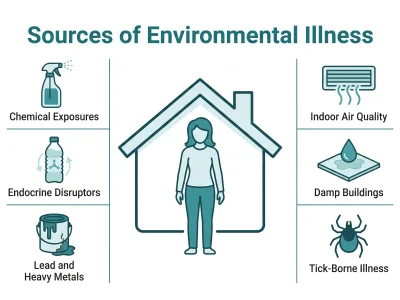
Environmental illness describes health problems linked to things in the places we live and work, such as chemicals, metals, polluted indoor air, damp buildings and tick bites. Endocrine disruptors are natural or human-made chemicals that can mimic, block or interfere with the body’s hormones, and they are found in some packaging, cosmetics, toys, carpet and pesticides. Indoor air pollutants can cause eye, nose and throat irritation, headaches, dizziness and fatigue, and lead can cause abdominal pain, headaches, trouble sleeping and low energy. Multiple chemical sensitivity is a proposed name for symptoms that seem to follow small exposures, though it is not a recognized diagnosis. Evaluation starts with a careful exposure history.

Home and work exposures reviewed
Labs matched to your history
In person or virtual visits
What Is Environmental Illness?
Environmental illness is a broad term for health problems that seem to come from the environment around you rather than from inside your body. The source can be a chemical in a product you use every day, a metal in old paint or pipes, the air inside a home or office, a water-damaged building or a tick bite on a weekend hike. Many of these exposures are invisible, which is why they are often missed or mistaken for something else.
This page brings those causes together and links to our in-depth pages on mold toxicity and Lyme disease.
Immediate and Long-Term Effects of Exposures
Some health effects from indoor pollutants show up soon after exposure, such as irritation of the eyes, nose and throat, headaches, dizziness and fatigue. These are usually short-term and treatable, sometimes simply by removing the source. Other effects, including some respiratory diseases, heart disease and cancer, may appear years later or only after long or repeated exposure. How someone reacts depends on age, existing health conditions and individual sensitivity, which varies a great deal from person to person.
Environmental Toxins
Environmental toxins are substances in air, water, food, soil and everyday products that may harm health. Three groups come up most often.
Endocrine Disruptors
Endocrine disruptors are natural or human-made chemicals that may mimic, block or interfere with the body’s hormones. Hormones act in extremely small amounts, so even minor disruptions in their levels may have significant effects. These chemicals are found in many everyday products, including some cosmetics, food and beverage packaging, toys, carpet and pesticides, and some flame retardants. Well-studied examples include BPA, used in some plastics and can linings, and phthalates, used in some packaging, fragrances and personal care products. You can come in contact with them through air, diet, skin and water. They cannot be avoided completely, but informed choices can lower your exposure. Read more about hormones on our sex hormone imbalance page.
PFAS and Health Effects
PFAS are a group of nearly 15,000 synthetic chemicals used to keep food from sticking to packaging or cookware, make clothes and carpets stain-resistant and create firefighting foam. They break down slowly, if at all, so blood levels of some PFAS can build up over time, and one national survey found PFAS in the blood of 97% of Americans. Research to date shows possible links between certain PFAS and altered metabolism and weight regulation, an increased risk of some cancers and a reduced ability of the immune system to fight infections.
Heavy Metal Toxicity and Lead Poisoning Symptoms in Adults
Lead is a very strong poison, and you cannot see, taste or smell it. In adults, lead exposure usually happens by breathing it in at work, and it is also found in homes painted before 1978, old plumbing, soil near highways and hobbies such as soldering and stained glass. Lead poisoning usually builds slowly through repeated small exposures, so there may be no obvious symptoms at first. Possible symptoms include abdominal pain and cramping, anemia, constipation, headaches, irritability, trouble sleeping, low appetite and energy, reduced sensations and difficulty getting pregnant. Very high levels can cause vomiting, muscle weakness and seizures, which is an emergency.
Multiple Chemical Sensitivity and Building-Related Illness
Some people feel unwell around everyday chemicals or inside certain buildings. These are two of the most searched concerns in this area, and both deserve a careful, honest look.
Multiple Chemical Sensitivity
Multiple chemical sensitivity, or MCS, is a proposed name for a set of symptoms that seem to happen after exposure to small amounts of everyday substances, such as air fresheners, cleaning products, perfumes, cigarette smoke, fuel fumes, nail polish, paint thinner or ink. It is also called idiopathic environmental intolerance. Symptoms usually involve more than one body system and can include feeling generally unwell, pins and needles in the skin, chest or throat tightness, trouble breathing, nausea, heart palpitations, shaking, sweating, weakness and brain fog. The symptoms are real and can be severe enough to keep people from work and friends.
Multiple chemical sensitivity is not recognized as a diagnosis by the American Academy of Allergy and Immunology or the American Medical Association, and studies have not been able to prove that low-level exposures cause it. There is no specific test or treatment, and tests of organ function usually come back normal. Care focuses on managing symptoms, avoiding triggers where possible and treating related conditions such as asthma or anxiety. The symptoms can overlap with chronic fatigue syndrome and fibromyalgia, so a full workup matters.
Sick Building Syndrome
Sick building syndrome describes situations in which people in a building have acute health and comfort complaints that seem linked to time spent there, but no specific illness or cause can be found. Common complaints include headache, eye, nose or throat irritation, dry cough, dry or itchy skin, dizziness, nausea, trouble concentrating, fatigue and sensitivity to odors, and most people feel better soon after leaving the building. When a diagnosable illness can be traced directly to airborne building contaminants, it is called building-related illness instead. Water collected on ceiling tiles, carpeting or insulation can breed bacteria and molds, which is why damp buildings come up so often. Our mold toxicity page covers mold in depth.
Tick-Borne Illness
Ticks can spread more than one infection, and Lyme disease is the best known. Blacklegged ticks can also spread anaplasmosis and babesiosis, and a person can have more than one tickborne infection at a time. Our Lyme disease page covers symptoms, testing and treatment.
Environmental Illness Conditions We Treat
These pages go deeper into the environmental exposures we see most often. Each one covers symptoms, testing and treatment, along with how we approach care at Renew.
Mold Toxicity
Molds produce allergens, irritants and, in some cases, potentially toxic substances called mycotoxins. Drying water-damaged areas within 24 to 48 hours helps keep mold from growing indoors.
Lyme Disease
Lyme disease is a bacterial infection spread by the bite of infected blacklegged ticks, most common in the Northeast, mid-Atlantic and upper Midwest. Most cases are treated successfully with a few weeks of antibiotics.
Indoor Air Quality and Reducing Your Exposure
Indoor pollution sources that release gases or particles into the air are the main cause of indoor air quality problems. They include fuel-burning appliances, tobacco smoke, building materials and furnishings and household products. Too little ventilation lets pollutants build up, and high temperature and humidity can raise the levels of some pollutants.
Practical steps that lower exposure include removing or changing the source when it is known, keeping heating and cooling systems maintained and filters changed, replacing water-stained ceiling tiles and carpet, using paints, adhesives, solvents and pesticides only in well-ventilated areas, bringing in more outdoor air and fixing leaks and drying wet areas quickly. If you suspect lead paint in your home, get advice on safe removal before any sanding or stripping, since that releases fine lead dust. If your symptoms ease when you are away from a place, that is an important clue to share with your provider.


How We Care for Environmental Illness at Renew
Care at Renew Integrative Health starts with a detailed exposure history: where you live and work, the age and condition of your buildings, any water damage, your hobbies, the products you use and when your symptoms started or ease. Your visit also includes your full health history, including family history, and a physical examination.
From there, we decide together which lab work fits your history and rule out other conditions with similar symptoms. Your plan may include reducing exposures at home and work, treating related conditions, nutrition and lifestyle support and follow-up visits to track how you feel. When a water-damaged building is suspected, we look at the whole building, not just one mold, and talk through next steps.
How to Prepare for Your Appointment
Before your first visit, complete your medical history, diet log and current symptoms through our patient portal, along with the previous two years of medical testing. Note any water damage, renovations or moves, your job and hobbies and the products you use most. We offer in-person visits at our Newark, Delaware office and virtual consultations across the United States.
Environmental Illness FAQs
Is Multiple Chemical Sensitivity a Real Diagnosis?
The symptoms are real, but multiple chemical sensitivity is not currently recognized as a diagnosis by the American Academy of Allergy and Immunology or the American Medical Association, and there is no specific test for it. A careful workup looks for other conditions that can cause similar symptoms.
Can My Home or Office Make Me Sick?
It can. Indoor air pollutants can cause irritation, headaches, dizziness and fatigue, and sick building syndrome describes complaints linked to time spent in a building. If you feel better soon after leaving a place, that is worth noting.
What Are the Signs of Lead Poisoning in Adults?
Lead poisoning often builds slowly and may cause no obvious symptoms at first. Possible signs include abdominal pain, anemia, constipation, headaches, irritability, trouble sleeping and low energy. Very high levels can cause seizures and need emergency care.
How Can I Lower My Exposure to Endocrine Disruptors?
They cannot be avoided completely, but you can make informed choices about the products you bring into your home, such as some plastics, food packaging, cosmetics and fragranced products, to lower your exposure.
Is Mold the Same as Environmental Illness?
Mold is one cause of environmental illness, often linked to water-damaged buildings. Our mold toxicity page covers its symptoms, testing and treatment.
Where Can I Find Environmental Medicine Near Me?
Looking for help with toxic exposures near Newark, Delaware, or a virtual visit from anywhere in the United States? Our holistic medicine practitioner, Andrea Dean, CRNP, reviews your exposures, symptoms and history and builds a plan around you.
Looking for environmental illness care in Newark, Delaware, or a virtual visit from anywhere in the United States? Our nurse practitioner can review your exposures, symptoms and history with you. Book your consultation below.