


Mold Toxicity and Mold Illness: Symptoms, Testing and Functional Treatment
Mold toxicity, also called mold illness, describes the symptoms that can follow exposure to mold and other microbes in water-damaged buildings. Mold releases spores and some molds produce chemicals called mycotoxins. Breathing in or touching mold can trigger allergic reactions, airway irritation and inflammation in some people. Common signs include fatigue, brain fog, headaches, congestion, joint pain, skin rashes and mood changes. Symptoms often begin or worsen in one building and ease when you leave it. Leaks, humidity and poor ventilation drive mold growth. Because the symptoms overlap with many other conditions, your exposure history is the key to finding the cause.
What Is Mold Toxicity? Mold Illness and Black Mold Exposure
Mold toxicity is the term many functional medicine practitioners use for the whole-body illness that can follow time in a water-damaged building. At Renew Integrative Health, Andrea Dean, CRNP, takes a functional medicine approach to mold illness in Newark, Delaware, reviewing your exposure, symptoms and history together. The CDC describes respiratory symptoms as the best-established effect of indoor mold, and the wider whole-body picture is what Andrea investigates.
Black Mold Exposure and Other Household Molds
Black mold exposure involves Stachybotrys, the common name for a dark mold found in water-damaged buildings. It is one of many. The most common indoor molds are Cladosporium, Penicillium and Aspergillus. Mold needs moisture more than time, and wet materials dried within 24 to 48 hours usually will not grow it. A leak that lingers for days is the real turning point.
Mold Illness and Water-Damaged Buildings
Mold rarely shows up alone. Water damage can also support bacteria such as Actinomyces, so Andrea reviews the whole building, not one mold. Mold illness is a form of environmental illness and often appears alongside other chronic conditions. The gap between exposure and feeling unwell can be wide, which makes the link easy to miss. To see why exposure can affect the body at all, it helps to look at what mold releases.
Andrea explains how water-damaged building illness can affect hormones, thyroid function and energy.
Mycotoxins and Mold Poisoning: How Mold Affects Your Body
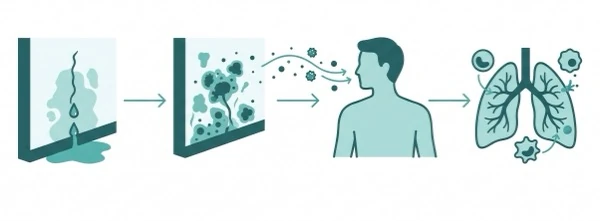
Mold can affect your body in more than one way, and knowing which applies changes what you do next. Mold releases spores, and certain molds are toxigenic, meaning they can produce mycotoxins. Mold poisoning is the popular label for illness blamed on those toxins, though the same exposure can also act through allergy, irritation and inflammation. The pathway looks like this: water damage → mold and bacterial growth → spores and fragments in the air you breathe → an immune and inflammatory response → symptoms that can reach beyond your lungs.
Mycotoxin Poisoning and the Immune Response
Laboratory work in mice shows that inhaled Stachybotrys spores can trigger innate immune responses, including in the brain. The doses were far higher than typical human exposure. That is why Andrea looks at inflammation, not only allergy, when your symptoms go beyond congestion. How strongly you react depends on the dose, the mix of organisms and your own immune system. Next, the symptoms that tend to show up.
Symptoms of Mold Toxicity and Mold Exposure
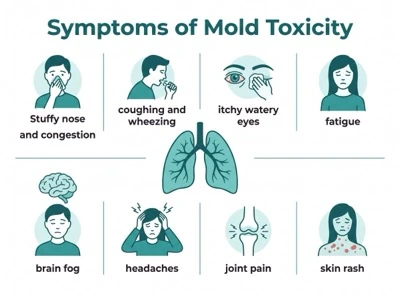
Symptoms of mold toxicity fall into two groups: allergic and irritant reactions that are well recognized, and whole-body symptoms that people with mold illness commonly report. Most people notice a mix.
Allergic and Respiratory Symptoms of Black Mold Exposure
Black mold exposure and other mold exposure can cause a stuffy nose, sore throat, coughing, wheezing and burning eyes. People with asthma or mold allergy tend to react most strongly. These toxic mold symptoms often ease when you leave the building.
Brain Fog, Fatigue and Whole-Body Symptoms
The warning signs of mold toxicity that people commonly report include fatigue, brain fog, headaches, joint pain, mood changes and digestive upset. These symptoms are nonspecific, so Andrea checks for other causes first. Thyroid disease is a frequent look-alike, and she reviews Hashimoto’s history before attributing fatigue and brain fog to mold. She also sees hormone patterns, such as irregular cycles and worse PMS, in some patients with mold exposure.
Skin Rashes and Facial Symptoms From Mold Exposure
Itching, redness and rashes are recognized effects of mold exposure. People also describe facial redness, puffiness and breakouts, though those changes are reported more often than proven and many skin conditions look alike. A rash that improves away from the building deserves a closer look. Which brings up the question of why some people react and others do not.
Long-Term Effects of Mold Exposure: Why Some People Get Sick
Not everyone in a water-damaged building gets sick, and that gap is where root-cause thinking matters most.
Long-Term Mold Exposure and Chronic Illness
The long-term effects of mold exposure are best documented in the airways, where indoor mold is linked to respiratory symptoms even in healthy people. Beyond the lungs, ongoing exposure can sit alongside chronic illness and be missed when another diagnosis takes the credit. Some labs used to assess mold exposure are also abnormal in tick-borne illness, so Andrea considers Lyme disease when the picture does not add up. Hormone changes are another pattern she watches for, including signs of sex hormone imbalance.
Why the Same Water-Damaged Home Affects People Differently
Mold exposure effects vary because your reaction depends on more than the mold. Dose and duration matter, and so do the mix of organisms in the building and your own immune system. People with asthma, allergies, weakened immunity or chronic lung disease are more likely to react strongly. Two people can share one home and have very different symptoms, which is why the right assessment matters. Here is how mold exposure is tested.
Mold Toxicity Testing: Mycotoxin Tests and Mold Exposure Testing
There is no single test that confirms mold toxicity, so testing works best as one part of a larger picture. How to test for mold exposure starts with your history. Andrea reviews your exposure history, and evaluating the building for mycotoxins, endotoxins and Actinomyces helps identify every organism involved. Labs then show how your body is responding.
Mold Exposure Testing: Blood and Immune Markers
Blood work looks for your immune system’s response. Research supports mold-specific IgE, a marker of allergic sensitization, as the most useful blood test, while mold-specific IgG was not an effective marker of exposure. Andrea also uses labs that show the immune response and inflammation present. Several of these are abnormal in other conditions, including tick-borne illness, so results are read alongside your symptoms and never on their own.
Mycotoxin Urine Tests: What They Can and Cannot Show
Mycotoxin tests on urine are widely marketed and measure fungal compounds your body excretes. They can add a data point, but labs do not standardize them and there are no agreed thresholds for a harmful level. A result also cannot tell you where the exposure happened or how much you inhaled. That is why Andrea weighs any result against your exposure history, which stays the anchor. Once you know what is driving your symptoms, treatment can begin.

Treatment for Mold Poisoning: Conventional and Functional Approaches
Treatment for mold poisoning starts with stopping the exposure, because no plan holds up if you keep living in a water-damaged home. Toxic mold treatment then follows a simple order:
- Remove the exposure by repairing leaks, drying or discarding wet materials and remediating the building, or by leaving it.
- Treat the symptoms, including allergy and asthma care where it applies.
- Support the body with a plan that addresses detox pathways, gut health, inflammation and energy.
- Prevent a recurrence by keeping the space dry and clean.
The two approaches below work together.
Conventional Treatment for Mold Exposure
- Fixing the water source and remediating the building
- Allergy and asthma medicines to ease symptoms
- Evaluation for infection when symptoms are severe or your immune system is weakened
Functional Medicine Treatment and Mold Detox
Andrea works with patients to support the body once the exposure is addressed. Mold detox in her practice may include:
- A prescription binder such as cholestyramine, used off-label, that may help carry toxins out through the gut
- Glutathione detox support for your body’s natural detox pathways
- Peptide therapy to support gut health and calm inflammation
- IV nutrient therapy, including glutathione, when digestion is compromised
- Sinus and nasal care when organisms in the sinuses are part of the picture
- Home support such as infrared sauna, an anti-inflammatory diet and regular bowel movements
Dr. Roger Seheult and Dr. Andrew Huberman discuss how mold can affect the lungs and immune system, and why testing is not definitive.
Even clinicians disagree about how to define and treat mold illness, and research on supportive detox approaches is still limited. That is why Andrea builds your plan around your exposure, symptoms and response. She adjusts it as you improve. The questions below cover what patients ask most.
Frequently Asked Questions About Mold Toxicity
How Toxic Is Black Mold?
The CDC advises removing mold promptly regardless of type, and the most common effects of any mold are allergy and irritation. What matters more is how long you are exposed, how much mold is present and how sensitive your body is. Visible mold in a damp space deserves prompt cleanup.
What Are the Symptoms of Mold Toxicity?
Common symptoms include a stuffy nose, coughing, wheezing and itchy eyes, along with fatigue, brain fog, headaches and joint pain. Symptoms often begin or worsen in one building and ease when you leave it. Because they overlap with many conditions, a full history matters.
Can Mold Exposure Cause Headaches?
Headaches are among the symptoms commonly reported after mold exposure, often alongside congestion and brain fog. Many other conditions cause headaches too, so timing matters. A headache that improves away from a damp building is worth mentioning at your visit.
What Are Mycotoxins?
Mycotoxins are toxic compounds that certain molds produce. Their role in illness from indoor mold is still debated, which is why testing and treatment plans start with your exposure history rather than a single result.
How Do You Test for Mold Toxicity?
No single test confirms mold toxicity. Assessment combines your exposure history, an evaluation of the building and labs that show your immune response. A home mold test alone cannot tell you whether mold is making you sick, and visible mold usually needs cleanup before any sampling.
How Do You Detox From Mold?
Detox starts with leaving or fixing the exposure, since no protocol works while you keep breathing mold. After that, Andrea works with patients on gut, liver and inflammation support, and options such as NAD infusion may support cellular energy. Plans are individualized and paced to how you respond.
What Kind of Doctor Treats Mold Exposure?
Mold exposure is evaluated by several kinds of clinicians, including allergists, pulmonologists, environmental medicine clinicians and functional medicine practitioners. Which one fits depends on whether your symptoms are mostly allergic and respiratory or whole-body. Andrea Dean, CRNP, is a functional medicine specialist who reviews your exposure and symptoms together and supports hormone balance with options such as BHRT when patterns point that way.
Looking for a Mold Toxicity Doctor in Delaware?
Searching for mold toxicity treatment near you? Renew Integrative Health sees patients in person in Newark and virtually across all 50 states. Send a message and our nurse practitioner will help you take the next step.