


Peptide Therapy and Injections: Types, Evidence and Safety
Peptide therapy uses peptides, short chains of amino acids that are typically 2 to 50 units long, to act on specific processes in the body. Some peptides are FDA-approved prescription medicines, such as semaglutide and tirzepatide for type 2 diabetes and weight management, teriparatide for osteoporosis and bremelanotide for low sexual desire in premenopausal women. Others, such as BPC-157 and TB-500, are not FDA-approved, and the FDA has raised concerns about possible immune reactions, impurities and limited human safety data. Most peptide medicines are given as injections under the skin. Common side effects include injection-site reactions, nausea and other stomach symptoms.
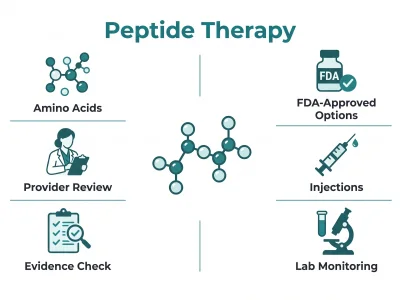
What Is Peptide Therapy?
A peptide is a short chain of amino acids, typically 2 to 50, linked by chemical bonds called peptide bonds. Peptide therapy means using a specific peptide as a medicine to act on one process in your body. Since insulin was introduced almost a century ago, more than 80 peptide drugs have reached the market, for conditions including diabetes, osteoporosis, cancer and chronic pain.
Some peptides used today are well-studied, FDA-approved prescription drugs. Others are early-stage compounds with little human research. Knowing which group a peptide belongs to is the most important part of the decision, and it shapes everything else on this page.
Peptides vs Proteins
Peptides and proteins are both made of amino acids. The difference is length. A chain of up to about 50 amino acids is a peptide, while a longer chain of 51 or more is called a polypeptide. The proteins your cells make are built from one or more polypeptides.
Andrea Dean, CRNP, talks about BPC-157 in this YouTube Short.
What Are Peptide Injections?
Most peptide medicines are given as a small injection under the skin. Insulin is one of the best-known examples, and it can be given with a syringe, a pen or a pump. Semaglutide, tirzepatide, teriparatide, bremelanotide and tesamorelin are all injected under the skin, and semaglutide also comes as a tablet.
List of Injectable Peptides and What They Do
FDA-Approved Peptide Medicines
- Semaglutide (Ozempic, Wegovy): Used for blood sugar control in type 2 diabetes, for weight loss in certain people with obesity or overweight and weight-related health problems, and to lower the risk of heart attack and stroke in certain adults with heart or blood vessel disease.
- Tirzepatide (Mounjaro, Zepbound): Used for type 2 diabetes, for weight loss in certain people with weight-related problems, and for obstructive sleep apnea in adults with obesity.
- Teriparatide: A synthetic form of parathyroid hormone used to treat osteoporosis.
- Bremelanotide (Vyleesi): Used for hypoactive sexual desire disorder in women who have not gone through menopause.
- Tesamorelin: A growth hormone-releasing factor analog used to reduce extra abdominal fat in adults with HIV and lipodystrophy. It is not meant for weight loss.
Peptides We Offer at Renew
At Renew Integrative Health, we prescribe GLP-1 medicines (semaglutide and tirzepatide), sermorelin, and BPC-157 and TB-500. They are very different from each other in how much evidence and regulatory review stand behind them, and we explain where each one stands before you decide.
Other Peptides You May Hear About
Ipamorelin, CJC-1295, AOD-9604 and GHK-Cu are often promoted online for muscle, fat loss, skin or anti-aging. The FDA has raised safety concerns about each of them, including possible immune reactions and limited human data. Serious adverse events have been reported with CJC-1295, including an increased heart rate.
What the Evidence Shows for Each Peptide
The benefits of peptide therapy depend entirely on the peptide. Here is what the research supports for the peptides we offer.
GLP-1 Peptides for Weight Loss
Semaglutide and tirzepatide belong to a class called incretin mimetics. They help your pancreas release insulin when blood sugar is high, slow how quickly your stomach empties and may reduce your appetite, which can lead to weight loss. Both are FDA-approved for type 2 diabetes and for weight loss in certain people, and they are meant to be used along with diet and exercise changes.
Sermorelin
Sermorelin is a growth hormone-releasing peptide. A brand of sermorelin, GEREF, was FDA-approved for idiopathic growth hormone deficiency in children with growth failure and for testing whether the pituitary gland can release growth hormone. The maker discontinued it in 2008, and the FDA determined in 2013 that it was not withdrawn for reasons of safety or effectiveness. Human evidence for wellness uses, such as body composition or aging, is limited.
BPC-157 and TB-500
BPC-157 is promoted for tendon, muscle and gut healing. A 2025 systematic review found 36 studies, of which 35 were done in animals or the lab and only 1 in people. It is not FDA-approved, and its use is banned in professional sports. TB-500, a fragment of thymosin beta-4, is promoted for injury recovery, and the FDA has identified no human exposure data for it.
The FDA has listed safety concerns for both, including a possible risk of immune reactions, complex peptide impurities and limited or no human safety information. That is why we treat them as experimental and only consider them after an honest conversation about what is and is not known.
Are Peptides Legal and FDA-Approved?
Whether a peptide is legal and approved depends on which peptide you mean. Prescription peptide drugs such as semaglutide, tirzepatide, teriparatide and bremelanotide have been FDA-approved for specific conditions. BPC-157, TB-500 and many other wellness peptides are not FDA-approved drugs, and regulatory status can change, so ask where a peptide stands today.
Compounded Peptides
A compounding pharmacy prepares a medicine for an individual patient. Compounded drugs are not FDA-approved, so the FDA does not review their safety, effectiveness or quality before they are used. For GLP-1 medicines, compounded versions should only be used when an FDA-approved drug cannot meet a patient’s needs, and adverse events, some needing hospital care, have been reported after dosing errors with compounded semaglutide.
“Research Use Only” Peptides
Peptides sold online labeled “for research purposes” or “not for human consumption” are a different risk. The FDA has warned companies selling unapproved GLP-1 products this way directly to consumers, often with dosing instructions, and urges people not to buy them because their quality is unknown and they may be harmful. Reports to the FDA have included contaminated multi-dose vials, medicines that arrived warm and counterfeit or mislabeled products. A prescription filled at a state-licensed pharmacy is the safer route.
Peptide Injection Side Effects
Side effects depend on the peptide. For semaglutide and tirzepatide, common side effects include nausea, vomiting, diarrhea, constipation, stomach pain and decreased appetite. Bremelanotide can cause nausea, flushing, headache and injection-site pain, redness or bruising, and it can raise blood pressure and lower heart rate for up to 12 hours after a dose. Tesamorelin, a growth hormone-releasing peptide, can cause swelling of the hands, feet or ankles and joint or muscle pain.
Semaglutide carries an important warning: it may raise the risk of thyroid tumors, including thyroid cancer. It caused thyroid tumors in rats, and it is not known whether it does in people. Get care for a lump or swelling in your neck, hoarseness, trouble swallowing or shortness of breath.
When to Get Emergency Care
Stop a GLP-1 medicine and call your provider right away for stomach pain that will not go away and may spread to your back, with or without vomiting. Call 911 for signs of a severe allergic reaction, such as hives, swelling of the face, eyes or tongue, trouble swallowing or difficulty breathing.


How Peptide Therapy Works at Renew
Peptide therapy at Renew Integrative Health starts with understanding why you want it. Before your first visit, you complete your medical history, diet log and current symptoms through our patient portal, along with the previous two years of medical testing. The visit covers your history, medications, goals and a physical examination.
From there, we talk through your options honestly, including which peptides are FDA-approved for your goal, what the evidence shows for the others and what the risks are. If peptide therapy is a good fit, your plan covers the peptide, dose, schedule and how we will track your progress. Follow-up visits let us adjust the plan or stop if it is not helping.
Who May Be a Good Fit
Peptide therapy tends to suit people who have a clear goal, are willing to do baseline labs and follow-up visits, and want to understand which options are FDA-approved and which are still experimental.
Peptide Therapy FAQs
Is Peptide Therapy Safe?
It depends on the peptide and where it comes from. FDA-approved peptide drugs have well-documented side effects and warnings. Many wellness peptides have little human data, and the FDA has raised safety concerns about several of them. Andrea Dean, CRNP, reviews your history, explains the evidence for each option and monitors you throughout treatment.
What Is the Best Peptide for Water Retention?
No peptide is approved to treat water retention. In fact, a growth hormone-releasing peptide such as tesamorelin can cause swelling of the hands, feet or ankles. Ongoing leg or ankle swelling has many possible causes, including heart, kidney or liver problems, certain medicines and hormones, and long periods of sitting or standing, so it deserves a checkup. Call 911 if swelling comes with shortness of breath or chest pain.
Are Peptides Injected or Taken Orally?
Most peptide medicines are injected under the skin, including semaglutide, tirzepatide, teriparatide and bremelanotide. Semaglutide also comes as a tablet. Collagen peptides are sold as supplements, and supplement makers, not the FDA, are responsible for evaluating their safety and labeling before they are sold.
Do You Need a Prescription for Peptides?
FDA-approved peptide drugs such as semaglutide, tirzepatide and teriparatide require a prescription. Products labeled “for research purposes only” are not intended for people, and the FDA urges consumers not to buy them. A prescription from a licensed provider, filled at a state-licensed pharmacy, is the safer route.
Is BPC-157 FDA Approved?
No. BPC-157 is not FDA-approved, most of its research comes from animal and lab studies, and the FDA has listed safety concerns about it, including a possible risk of immune reactions.
How Much Does Peptide Therapy Cost?
Cost depends on the peptide, your dose, how long you use it and the pharmacy that prepares it. An exact price needs a consultation, and your first visit identifies the most cost-effective approach for your goals.
Where Can I Find Peptide Therapy Near Me?
Looking for peptide therapy near Newark, Delaware? Renew Integrative Health offers in-person visits in Newark and virtual consultations. Our holistic medicine practitioner, Andrea Dean, CRNP, builds a plan around your goals and health history.
Looking for peptide therapy in Newark or elsewhere in Delaware? Our nurse practitioner can review your history and explain your options honestly. Book your consultation below.