


Andropause (Male Menopause): Symptoms, Causes and Treatment
Andropause is the popular name for the slow, age-related drop in testosterone in men, also called male menopause, late-onset hypogonadism or androgen deficiency. Testosterone declines about 1% a year, much more gradually than estrogen falls in women, so many men do not notice it. When levels are low and symptoms appear, they can include low sex drive, fewer morning erections, less muscle and more body fat, low mood and trouble concentrating. Diagnosis takes symptoms plus two morning blood tests. Nutrition, activity and treating sleep apnea come first, and testosterone therapy is an option for some men with a medical cause, with risks to review.

Morning hormone labs, not guesses
Care that works with your team
In person or virtual visits
What Is Andropause?
Andropause is a term for decreasing testosterone levels in men. It is also called male menopause, age-related low testosterone, male hypogonadism or androgen deficiency. Testosterone production falls about 1% a year, much more gradually than estrogen production in women, so the shift is not as drastic and many men do not notice it for years. Healthcare providers often debate whether to call it “menopause” at all, since men never have a sudden stop in hormone production the way women do.
What matters is not the name. When testosterone is low and you have symptoms, it is a real, testable and treatable condition. This page explains the symptoms, causes, testing and treatment options. For the bigger picture on hormones in both men and women, visit our sex hormone imbalance page.
Is Andropause the Same as Male Menopause?
Yes, they describe the same idea: a gradual age-related decline in testosterone. The difference from menopause is speed and intensity. Women’s estrogen production drops much faster, while men’s testosterone declines slowly over years or decades. That is why the symptoms are often more subtle and easier to blame on stress, work or just getting older.
Andropause Age and Testosterone Levels by Age
Testosterone declines about 1% a year starting in the late 30s, and the risk of low levels rises after age 45, with obesity, poorly managed type 2 diabetes, obstructive sleep apnea, chronic kidney disease, cirrhosis and HIV. There is no single normal number for every man. Results depend on the test used, your age, your symptoms and other conditions, and testosterone normally declines with age, so an abnormal result alone does not diagnose a condition. Levels below 300 ng/dL are considered low in adults, and the diagnosis is made only when low levels come with symptoms.
Andropause Symptoms
Andropause symptoms come from falling testosterone, and they tend to build slowly. Many overlap with stress, poor sleep, depression and other health conditions, which is why testing matters.
Low Testosterone Symptoms in Men
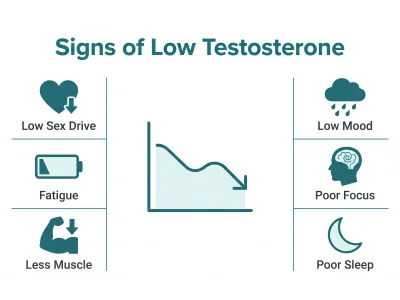
Symptoms of low testosterone in men fall into three groups:
- Sexual: low sex drive, loss of morning or spontaneous erections and trouble getting or keeping an erection. These are the most specific signs.
- Physical: more body fat, less muscle strength, mass and endurance, hot flashes, enlarged breast tissue, shrinking testicles, loss of armpit and pubic hair and a low or zero sperm count.
- Emotional and mental: depressed mood and problems with concentration or memory.
Signs of Low Testosterone You Might Dismiss
Fatigue, a softer midsection and a weaker workout are easy to blame on age. The pattern is what stands out: several changes together, over months. Loss of morning erections and a drop in sex drive are the most specific signs, so mention them even if they are hard to talk about.
Mood Changes and Depression
Depressed mood is a recognized symptom of low levels, and depression has many causes, so it deserves its own attention. If you have low mood that does not lift, tell your provider, and if you are thinking about harming yourself, call or text 988. Our behavioral health page covers depression and stress in more depth.
When to See a Provider
See a provider when you have symptoms of low levels, especially symptoms that affect your quality of life. Avoid over-the-counter supplements for these symptoms and talk through treatment options with a provider instead.
Hypogonadism: Causes of Low Testosterone in Men
There are several causes, and finding the cause shapes the treatment.
Aging
Testosterone naturally declines with age, and for many men that gradual decline is the whole story. Aging is one cause among several, which is why a full history and testing are worth doing before assuming a low number is just age.
Obesity, Diabetes and Sleep Apnea
Lifestyle and health conditions affect testosterone: obesity, diabetes and obstructive sleep apnea are linked to lower levels, and a brief illness can temporarily suppress production. In a debate among endocrinologists on treating low testosterone in men with obesity, one said most clinicians focus on weight loss as the best overall treatment, and the group agreed there is no specific standard of care for it.
Medicines and Other Causes
Some medicines and substances lower testosterone, including some prostate cancer, digestive and pain medicines, opiates and opioid-dependence treatments, anabolic steroids and alcohol use disorder. Problems in the testicles themselves, such as injury, infection, chemotherapy or radiation, genetic conditions like Klinefelter syndrome, and problems in the pituitary or hypothalamus can also cause it.
How Low Testosterone Is Diagnosed
Diagnosis starts with your symptoms, history, medicines and a physical exam. If you have symptoms, blood tests follow: usually two separate morning samples of total testosterone, since levels peak then, plus luteinizing hormone (LH), which helps show whether the pituitary is involved, and prolactin. Most tests are drawn between 7 and 10 in the morning, and tell your provider if you are sick on test day. Results can be hard to interpret in older or obese men, so an endocrinologist may review them.
At Renew we also look at the hormones that work alongside testosterone, including thyroid hormones, DHEA and cortisol, so you get the whole picture instead of one number.
Andropause Treatment
The right treatment depends on your cause, your symptoms and your goals. You and your provider decide together.
Lifestyle Changes First
First-line treatment is nutritious eating and physical activity, and other treatment is considered if that does not help after six to 12 months or if symptoms are severe. If you have obstructive sleep apnea, treating it matters, and untreated sleep apnea can rule out testosterone therapy. If obesity is part of the picture, weight loss is the main lever.
Testosterone Replacement Therapy
Testosterone replacement therapy is a medical treatment for confirmed low testosterone with symptoms. Forms include a daily skin gel, injections every one to two weeks or longer-acting injections, pellets implanted every three to six months, a nasal gel and oral pills for specific conditions. Testosterone products are approved solely for men who lack or have low testosterone levels together with an associated medical condition, such as testicular failure or a pituitary problem, and no testosterone product is approved for men with low testosterone and no associated medical condition. That is a reason to confirm the diagnosis carefully and to talk openly about what the evidence does and does not show.
Testosterone Therapy Risks
In 2025 testosterone labels were changed class-wide: blood pressure studies confirmed that all testosterone products raise blood pressure, so labels now carry a blood pressure warning, and the older boxed warning language about cardiovascular risk is being removed after the TRAVERSE trial. In that trial of more than 5,200 men, major cardiovascular events occurred in 7.0% of men on testosterone and 7.3% on placebo, which was not a new safety signal. Updated prostate cancer and enlarged prostate safety information was requested in June 2026.
Testosterone therapy may not be an option if you have prostate cancer, an untreated prostate lump, an enlarged prostate, breast cancer, poorly managed high blood pressure, a recent heart attack or stroke, unmanaged heart failure or untreated sleep apnea. Men on therapy need regular follow-up, typically once or twice a year. Report any problem to the FDA’s MedWatch program. Our bioidentical hormone therapy page explains the difference between FDA-approved and compounded hormones.


How We Care for Andropause at Renew
Care at Renew Integrative Health starts with listening. Your first visit includes an extensive history, including family history, a physical examination and a review of past testing. We talk through your symptoms, sleep, stress, nutrition and medicines, and we order morning labs when they will change the plan.
From there, we build a plan around what you can change and what needs treatment, with follow-up visits to adjust it. When testosterone therapy fits, options include gel, cream, pellet and injection, and we explain which are FDA-approved and which are compounded and why we are recommending one for you. We work alongside your primary care provider and specialists, not instead of them, so your care stays coordinated.
How to Prepare for Your Appointment
Before your first visit, complete your medical history, diet log and current symptoms through our patient portal, along with the previous two years of medical testing. Bring a list of your medicines and supplements and a note on how your energy, mood, sleep and sex drive have changed. We offer in-person visits at our Newark, Delaware office and virtual consultations across the United States.
Andropause FAQs
What Age Does Andropause Start?
Testosterone starts declining about 1% a year in the late 30s, and the risk of low levels rises after age 45. Symptoms usually appear gradually.
Is Male Menopause Real?
The testosterone decline is real, and so are the symptoms when levels are low, but it is much more gradual than menopause in women. Providers often debate the name, not the symptoms.
What Are the Signs of Low Testosterone?
Low sex drive, fewer morning erections and trouble with erections are the most specific signs. Others include more body fat, less muscle strength, hot flashes, low mood and trouble concentrating.
Can Low Testosterone Cause Depression?
Depressed mood and problems with concentration or memory are recognized symptoms of low levels. If you are thinking about harming yourself, call or text 988.
How Is Low Testosterone Tested?
With blood tests, usually two separate morning samples of total testosterone, plus LH and prolactin, and a diagnosis only when levels are low and you have symptoms.
Is Testosterone Therapy Safe?
It has risks. All testosterone products raise blood pressure, and the TRAVERSE trial found no meaningful difference in serious cardiovascular events. It is not approved for men with low levels and no associated medical condition, and some conditions rule it out.
Where Can I Find a Low T Clinic Near Me?
Looking for low testosterone care near Newark, Delaware, or a virtual visit from anywhere in the United States? Our holistic medicine practitioner, Andrea Dean, CRNP, reviews your symptoms, history and labs and builds a plan around you.
Looking for low testosterone care in Newark, Delaware, or a virtual visit from anywhere in the United States? Our nurse practitioner can review your symptoms, history and labs with you. Book your consultation below.