


Low Dose Immunotherapy (LDI): What It Is and What the Research Shows
Low dose immunotherapy (LDI) uses very small doses of specific antigens, such as foods, pollens, molds or microbes, with the goal of helping the immune system tolerate triggers it overreacts to. An allergy is an immune response to substances that are usually not harmful. LDI is different from conventional allergen immunotherapy, such as allergy shots and under-the-tongue tablets, which have established uses for environmental and venom allergies. Research on LDI itself is limited. The published studies are small and have measured lab markers rather than symptoms, and a double-blind trial of another very-low-dose method found no benefit for hay fever. LDI has not been shown in clinical trials to treat any specific condition.
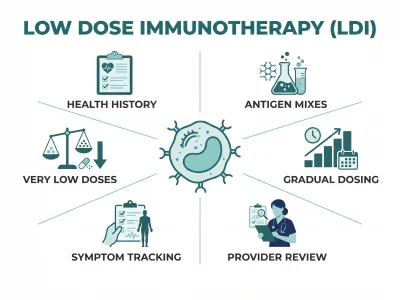
What Is Low Dose Immunotherapy?
Low dose immunotherapy, often shortened to LDI, uses extremely low doses of specific antigens. Antigens are the things your body is overreacting to, such as foods, pollen, dust, pet dander, chemicals or microbes. The idea behind LDI is to help your immune system tolerate these triggers instead of reacting to them.
That goal is the opposite of a vaccine. A vaccine is designed to build an immune response, while LDI is meant to calm an overreaction. LDI is highly individualized, and the antigens and doses are chosen for each person.
Andrea Dean, CRNP, explains low dose immunotherapy and how we use it at Renew in this YouTube Short.
What Is in an LDI Dose?
Each LDI plan is built around what your body is reacting to. The antigen groups we use at Renew Integrative Health include:
- Environmental and food mixes for allergies and sensitivities
- Bacterial antigens, such as strep and Lyme-related antigens
- Viral antigens, such as Epstein-Barr virus and herpes viruses
- Fungal and yeast antigens, such as candida
- Chemical sensitivity formulas
- Hormone formulas
The environmental and food mixes contain hundreds of antigens, so you do not need to know your exact trigger to start one of these mixes.
How LDI Differs From Allergy Shots
Allergy shots are the best-known form of allergen immunotherapy. Each shot contains a small amount of a substance you are allergic to, such as mold, dust mites, pet dander, pollen or insect venom. Your body then makes antibodies that block the allergen from causing symptoms in your nose, eyes and lungs.
Allergy shots follow a set schedule. During the build-up phase, usually the first 3 to 6 months, you get about 1 to 3 shots a week. During the maintenance phase, you get a shot about every 4 to 6 weeks for several years. Shots are used for allergic rhinitis, allergic conjunctivitis, allergy-related asthma, bee and fire ant sting allergies and eczema made worse by dust mites. They do not treat food allergies.
There is also a form of immunotherapy placed under the tongue, which may help with grass, ragweed and dust mite allergies. LDI is a separate approach that uses extremely low doses on its own individualized schedule, and it has a much smaller research base.
What the Research Shows on LDI
We want you to have an honest picture before you decide. Research on LDI is limited, and no large clinical trial has shown that it treats a specific condition.
A 2017 study of 47 patients looked at people treated with LDI for chemical and food sensitivities. It found lower calcium levels inside immune cells after treatment. That is a laboratory marker, not a measure of how people felt, so it does not tell us whether symptoms improved.
Another very-low-dose method, called enzyme potentiated desensitisation, was tested in a double-blind trial of 183 adults with severe hay fever. People who got the active injections did no better than people who got a placebo on problem-free days, quality of life or symptom severity. No clinically significant side effects occurred.
That is why we describe LDI as an individualized option to discuss with your provider, not a proven treatment.
What Conventional Allergy Immunotherapy Can Do
Allergy shots have a stronger track record. Some or all symptoms may ease after several months of treatment, relief can last several years, and in some people the shots may prevent new allergies or reduce asthma symptoms. Adults and children 5 and older can receive them.
LDI and Food Allergies
Allergy shots are not used for food allergies. For food allergies, avoiding the trigger is the main step, and epinephrine is used for severe reactions, along with an immediate call to 911. A medicine called Xolair (omalizumab) is approved for food allergies. It lowers the chance of reacting to small amounts of a food allergen but does not cure the allergy. LDI is not a substitute for any of these steps or for carrying epinephrine if it has been prescribed for you.
LDI and Lyme Disease
Lyme disease is a bacterial infection spread by the bite of blacklegged ticks. Most cases are treated with 10 days to 4 weeks of antibiotics, and people treated with appropriate antibiotics in the early stages usually recover rapidly and completely. The antibiotics most often used are doxycycline, amoxicillin and cefuroxime axetil.
Typical symptoms of Lyme disease include fever, headache, fatigue and a characteristic skin rash called erythema migrans. If left untreated, the infection can spread to the joints, the heart and the nervous system. Lyme disease is most common in the Northeast, mid-Atlantic and upper-Midwest regions of the United States, which includes Delaware. The best defense is to prevent tick bites. Remove attached ticks as soon as possible, and call your provider if you develop a fever, rash or other symptoms after a bite. LDI is not a replacement for antibiotic treatment. Learn more about Lyme disease at Renew.
How Allergies Are Diagnosed
An allergy is an immune response to substances that are usually not harmful. Your immune system overreacts and releases chemicals such as histamine, which cause symptoms. Common allergens include dust, food, insect venom, medicines, mold, pet dander and pollen.
To diagnose an allergy, a provider examines you and asks about your symptoms. Skin testing is the most common method:
- Prick test, where an allergen is placed on the skin and lightly pricked in
- Intradermal test, where a small amount is injected under the skin
- Patch test, used to check for contact allergies
Blood tests can measure IgE levels and eosinophil counts. Your provider may also use elimination testing, where you avoid a suspected trigger and then reintroduce it to see how you react.
Standard allergy treatment usually starts with avoiding your triggers, especially for food and medicine allergies. Medicines such as antihistamines, corticosteroids, decongestants and leukotriene inhibitors can help prevent or treat symptoms.
Do You Need Testing Before LDI?
Testing may or may not be needed, depending on what you are trying to accomplish. Allergy and sensitivity testing is not needed for the food and environmental mixes, because they contain hundreds of antigens. If you are using LDI alongside care for Hashimoto’s, antibody testing is used to monitor your progress.
Is Low Dose Immunotherapy Safe?
Because LDI has been studied so little, its side effects are not well documented. The hay fever trial of a very-low-dose method reported no clinically significant side effects, but it was one trial. We review your health history and discuss risks and benefits with you before you start.
Allergy Shot Safety
If you choose conventional allergy shots instead of or alongside LDI, it helps to know what to expect. Redness, swelling and itching where the shot was given are common, and some people get mild nasal stuffiness. A rare but serious risk is anaphylaxis, a life-threatening allergic reaction, so you stay at the office for 30 minutes after each shot. Allergy shots are usually not given to people with severe asthma or a heart condition, people taking certain medicines such as ACE inhibitors or beta-blockers, or people who are pregnant, although those who started before pregnancy may continue.
When to Get Emergency Care
A severe allergic reaction, called anaphylaxis, is a medical emergency. Use epinephrine if it has been prescribed for you and call 911 right away. Immunotherapy is usually one part of a broader allergy plan that may also include allergy medicines and avoiding your triggers.


What to Expect From LDI Treatment
LDI is a highly individualized therapy. Finding the right antigens and doses depends on clear, ongoing communication between you and our team. Treatment usually involves taking progressively stronger doses fairly close together until a response occurs, and the time frame is different for every patient.
How to Prepare for Your LDI Appointment
Before your first visit, complete your medical history, diet log and current symptoms through our patient portal. Please include the previous two years of medical testing, including diagnostic studies such as ultrasound, thermography and bone scans if applicable. Your initial consultation includes an extensive history, including family history, and a physical examination. We discuss the risks and benefits of low dose immunotherapy and decide together whether it is appropriate for you.
Low Dose Immunotherapy FAQs
What Is LDI Therapy?
LDI therapy uses extremely low doses of specific antigens, such as foods, pollens, microbes or chemicals, with the goal of helping your immune system tolerate them. Doses and antigens are chosen for each person.
Is Low Dose Immunotherapy the Same as Allergy Shots?
No. Allergy shots contain small amounts of the allergens you react to and follow a build-up phase and a multi-year maintenance phase. LDI uses extremely low doses on an individualized schedule, and it has far less research behind it.
Does LDI Work for Food Allergies?
No study has shown that LDI treats food allergies. Allergy shots are not used for food allergies either. Avoiding the trigger, carrying epinephrine if prescribed and, for some people, Xolair are the established steps.
Can LDI Treat Lyme Disease?
Lyme disease is treated with antibiotics, and early treatment usually leads to a full recovery. LDI is not a replacement for antibiotics.
How Long Does LDI Take?
The time frame varies with every patient. Doses are increased step by step until a response occurs.
Do I Need Allergy Testing First?
Not for the food and environmental mixes, which contain hundreds of antigens. Testing may still be useful depending on your goals, such as antibody testing for Hashimoto’s.
Where Can I Get Low Dose Immunotherapy Near Me?
If you are searching for low dose immunotherapy near me in Delaware, Renew Integrative Health in Newark offers LDI. Our holistic medicine practitioner, Andrea Dean, CRNP, will review your health history and help you decide whether it fits your plan.
Interested in low dose immunotherapy in Newark or elsewhere in Delaware? Our nurse practitioner can review your history and talk through your options with you. Book your consultation below.