


Fibromyalgia and Chronic Fatigue Syndrome: Symptoms, Causes and Functional Treatment
Fibromyalgia is a chronic condition that causes widespread pain, tenderness and fatigue throughout the body. Chronic fatigue syndrome, also called myalgic encephalomyelitis, causes extreme exhaustion lasting six months or longer that does not improve with rest and often worsens after physical activity. The two conditions share overlapping symptoms, including unrefreshing sleep, brain fog and muscle aches, and many patients experience both at once. Neither condition has a diagnostic test. Doctors diagnose fibromyalgia and chronic fatigue syndrome by reviewing symptoms and ruling out other illnesses such as thyroid disorders or anemia. Both conditions may involve changes in how the brain and nervous system process pain and energy signals, often triggered by infection, trauma or stress. Treatment options include IV therapy, bioidentical hormone replacement therapy (BHRT), peptide therapy, low dose immunotherapy, and NAD infusions tailored to individual causes.
What Are Fibromyalgia and Chronic Fatigue Syndrome?
What Is Fibromyalgia
Fibromyalgia is a chronic condition that causes widespread pain across the body, along with tenderness, fatigue and sleep problems. Doctors describe the pain as a constant dull ache that lasts at least three months and affects both sides of the body. Fibromyalgia changes how your brain and spinal cord process pain signals, so sensations that would not normally hurt can feel intensely painful.
What Is Chronic Fatigue Syndrome
Chronic fatigue syndrome, also called myalgic encephalomyelitis or ME/CFS, causes extreme exhaustion that lasts six months or longer and does not improve with rest. The exhaustion often gets worse after physical or mental activity, a pattern called post-exertional malaise. Many people with chronic fatigue syndrome also experience unrefreshing sleep and trouble concentrating.
The two conditions overlap so often that many patients are never sure which one they actually have, or whether they have both. Understanding what is happening inside your body is the first step toward getting the right care.
Andrea Dean, CRNP explains why the three leading fibromyalgia medications only help a fraction of patients, and why treating root cause matters.

How Fibromyalgia and CFS Affect the Body
Neither condition shows up on a standard blood test, which is part of why both are so often missed or dismissed.
Researchers do not know the exact cause of either condition. What they do know is that both involve a disruption in how your nervous system processes signals. In fibromyalgia, the brain and spinal cord amplify pain signals that would normally be minor. In chronic fatigue syndrome, the body’s energy production and immune response appear to malfunction after a trigger such as a viral infection, physical trauma or prolonged stress.
Part of diagnosing either condition means ruling out other illnesses first. Thyroid disorders and anemia both cause similar fatigue and pain, so your practitioner should screen for thyroid disorders and check for the autoimmune thyroid condition Hashimoto’s before settling on a fibromyalgia or chronic fatigue syndrome diagnosis. Left unaddressed, an underlying thyroid problem can look identical to either condition on the surface.
Signs and Symptoms
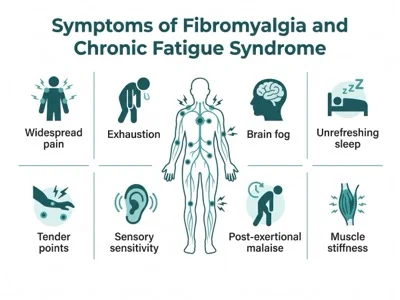
Fibromyalgia and chronic fatigue syndrome share several symptoms, but each has a distinct core pattern worth recognizing.
Fibromyalgia Symptoms
- Widespread pain and tenderness lasting three months or longer
- Tender points in specific locations across the body
- Fatigue that does not improve with sleep
- Brain fog, including trouble concentrating and remembering
- Morning stiffness lasting more than 30 minutes
- Sensitivity to light, noise, temperature and touch
- Headaches and digestive symptoms similar to IBS
Chronic Fatigue Syndrome Symptoms
- Extreme exhaustion lasting six months or longer, unimproved by rest
- Post-exertional malaise, where symptoms worsen after activity
- Unrefreshing sleep
- Trouble with memory, focus and concentration
- Muscle aches and joint pain without swelling
- Dizziness when standing up
- Sore throat and tender lymph nodes
If several of these symptoms sound familiar, particularly fibromyalgia symptoms in women, who make up most diagnosed cases, the next step is understanding what might be driving them.
What Actually Causes Fibromyalgia and Chronic Fatigue Syndrome
Conventional medicine often stops at “cause unknown.” Functional medicine looks further, at the specific triggers and imbalances behind each case.
What Triggers Fibromyalgia
Fibromyalgia symptoms often begin after a physical injury, surgery, infection or period of severe emotional stress, though they can also build up gradually with no clear trigger. From a functional medicine perspective, the underlying driver is rarely just one thing. Chronic inflammation, gut imbalances and nervous system dysregulation frequently work together to keep pain signaling turned up.
What Causes Chronic Fatigue Syndrome
Many chronic fatigue syndrome cases follow a viral infection, and researchers continue studying links to the Epstein-Barr virus and other post-viral triggers. Lyme disease and other tick-borne infections can also set off a similar pattern of persistent exhaustion, which is why Andrea screens for environmental illness and infectious triggers as part of a full workup, not just the fatigue itself.
If you have spent months asking why you are always tired with no clear answer, these root-cause connections are often exactly where conventional testing stops looking.
How Fibromyalgia and CFS Are Diagnosed
There is no single blood test for either condition, so diagnosis depends on a careful, thorough workup.
Doctors typically diagnose fibromyalgia and chronic fatigue syndrome by reviewing your symptom history, examining tender points, and running tests to rule out other conditions such as thyroid disease, anemia or autoimmune disorders. Andrea’s approach goes further than a standard rule-out panel. As a functional medicine provider, she tests for what conventional workups often miss, including mitochondrial dysfunction, chronic underlying infections, gut dysbiosis, nutrient deficiencies and toxic burden. Identifying which of these factors is active in your body is what allows treatment to target root cause instead of only managing symptoms.
Once you understand what is driving your symptoms, you can start addressing it directly rather than guessing.
Work with a Fibromyalgia Specialist in Newark
Andrea Dean sees patients in person in Delaware and virtually across all 50 states. Book a consultation to get started.

Treatment
Treatment for fibromyalgia and chronic fatigue syndrome works best when it addresses both symptoms and underlying cause.
Conventional Treatment
Three medications are FDA-approved specifically for fibromyalgia: duloxetine, pregabalin and milnacipran. Each works differently to reduce pain signaling or ease related symptoms, but on their own these medications help only a portion of patients, since they target symptoms rather than the underlying cause. Chronic fatigue syndrome has no FDA-approved medication. Conventional treatment instead focuses on managing specific symptoms such as sleep problems or pain.
Functional medicine physician Dr. Mark Hyman shares how he approaches complex chronic fatigue cases in his own practice, a perspective that closely mirrors Andrea’s root-cause approach at Renew.
Functional Medicine Approach
Andrea’s functional medicine approach can include anti-inflammatory nutrition, targeted supplementation, correcting nutrient deficiencies, and addressing gut health and any underlying infections identified during testing. The goal is to reduce the total burden on your nervous system so pain and fatigue signals have less to work with. Peptide therapy and IV nutrient therapy are two treatment pathways Andrea uses to support recovery alongside these lifestyle changes. Functional medicine physician Dr. Mark Hyman shares a similar root-cause approach to chronic fatigue in the video.
Energy Pacing for Chronic Fatigue
Pacing is a specific technique for managing chronic fatigue syndrome that involves matching your activity level to your actual energy capacity, rather than pushing through exhaustion. Because post-exertional malaise can set in after even modest overexertion, learning to pace activity, rest and recovery is often more effective than trying to exercise through the fatigue.
Frequently Asked Questions
Is fibromyalgia the same as chronic fatigue syndrome?
No. The two conditions overlap and often occur together, but fibromyalgia centers on widespread pain while chronic fatigue syndrome centers on exhaustion that worsens after activity.
What is the difference between fibromyalgia and chronic fatigue?
Fibromyalgia’s defining symptom is widespread pain and tenderness. Chronic fatigue syndrome’s defining symptom is extreme exhaustion lasting six months or longer that does not improve with rest.
Are fibromyalgia and chronic fatigue syndrome related?
Yes. Many patients experience both conditions at once, and researchers believe they may share overlapping triggers involving the nervous system and immune response.
What kind of doctor diagnoses chronic fatigue syndrome?
Primary care providers, rheumatologists and functional medicine practitioners can all diagnose chronic fatigue syndrome. A thorough workup that rules out other conditions matters more than the specific specialty.
Can men get fibromyalgia?
Yes. Fibromyalgia is diagnosed far more often in women, but men develop it too, and symptoms in men are sometimes overlooked or attributed to other causes.
What are the first signs of fibromyalgia?
Early signs often include widespread aching, unrefreshing sleep, morning stiffness and brain fog. Symptoms can build gradually or begin suddenly after an illness or injury.
How long does chronic fatigue syndrome last?
Chronic fatigue syndrome is a long-term condition that can persist for years. Many patients see meaningful improvement in symptoms with pacing and targeted treatment, even without a cure.