


Menopause and Perimenopause: Symptoms, Age and Treatment
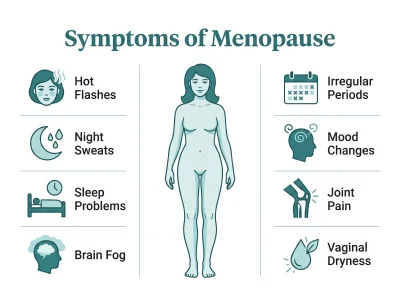
Menopause is when your periods have stopped for 12 months in a row. After menopause, the ovaries make very little estrogen and progesterone. The transition usually happens between ages 45 and 55, and the average age in the United States is 52. Perimenopause, the years before menopause, often begins in the mid- to late 40s and lasts about four years on average. Common symptoms include hot flashes and night sweats, sleep problems, brain fog, mood changes, joint pain, vaginal dryness and changes in periods. Treatments include hormone therapy, FDA-approved nonhormone medicines for hot flashes and treatments for vaginal symptoms.
What Is Menopause?
You reach menopause after 12 months in a row with no period, including no spotting. After menopause, your ovaries make very little estrogen and progesterone and stop releasing eggs. Menopause is a normal stage of life that every woman goes through, and symptoms vary a lot from person to person. If both ovaries are removed in surgery, menopause starts right away.
Menopause Age
The transition into menopause usually happens between ages 45 and 55, and the average age of menopause in the United States is 52.
What Is Perimenopause?
Perimenopause is the time before menopause when your hormone levels change. It usually begins in your mid- to late 40s, although some women notice symptoms in their mid- to late 30s. Your periods may become irregular, but you can still get pregnant. Perimenopause lasts about four years on average and can last up to 10 years.
Your provider can usually tell whether you are in perimenopause from your age, your symptoms and changes in your periods, so blood hormone tests are not usually needed to diagnose it. Tracking your periods and symptoms is the most useful thing you can bring to a visit.
Postmenopause and How Long Menopause Lasts
After menopause, you no longer have periods and cannot get pregnant. Some symptoms get better over time, while others stay the same or get worse. Hot flashes and night sweats last 7 to 12 years on average, and longer for some women. Without treatment, genital and urinary symptoms can get worse over time, and bone density keeps decreasing, which raises the risk of osteoporosis and broken bones.
Andrea Dean, CRNP, explains hormone therapy options, costs and what really matters when you decide, in this YouTube Short.
Menopause Symptoms
Estrogen, progesterone and testosterone act in nearly every system of your body, and their levels drop during perimenopause and after menopause. That is why menopause symptoms go beyond hot flashes. They can begin in perimenopause and range from mild to severe:
- Not feeling like yourself
- Hot flashes and night sweats
- Sleep problems
- Brain fog and memory changes
- Mood changes, anxiety and depression
- Joint and muscle pain
- Vaginal dryness, pain during sex and urinary symptoms
- Changes in your periods
- Changes in sexual desire
Signs of Perimenopause
In perimenopause, periods may change in length or flow, and some may be skipped. Many women notice hot flashes, trouble sleeping and mood changes during these years, and PMS can get worse as hormone levels rise and fall unpredictably. Read more on our PMS page.
Hot Flashes and Night Sweats
A hot flash is a sudden feeling of heat, often with flushing and sweating. Night sweats are hot flashes that happen during sleep, and they are one reason sleep can suffer. FDA-approved treatments for moderate to severe hot flashes include hormone therapy and nonhormone medicines.
Menopause Brain Fog
You may forget words or find it hard to focus. These changes are common in perimenopause and often improve after menopause. Hormone therapy is not used to treat brain fog or memory problems on their own.
Menopause Weight Gain
Falling hormone levels affect sleep, muscles and weight, and many women gain weight during menopause as their metabolism slows. Sleep, regular exercise and nutrition all play a part, and so do other hormones, which is why we look at your thyroid and the rest of your history too. Learn more on our sex hormone imbalance page.
Vaginal Dryness and Urinary Symptoms
Lower estrogen affects the tissues of the vagina, vulva, bladder and urinary tract. Healthcare providers call this genitourinary syndrome of menopause, or GSM. Symptoms include repeat urinary tract infections, pain during sex, burning or irritation, a sudden or frequent need to urinate and vaginal dryness. GSM can be treated.
Joint Pain and Mood
Aches in the joints and muscles are common. In a review of 37 studies, 57% of women in perimenopause had muscle or joint pain, compared with 40% of women before perimenopause. Irritability, anxiety and depression can also show up, and cognitive behavioral therapy and mindfulness-based stress reduction may help. If you are thinking about harming yourself, call or text 988.
Early Menopause
Menopause between ages 40 and 44 is early menopause. Menopause before age 40 is premature menopause, also called primary ovarian insufficiency. Sometimes there is no clear cause. Known causes include a family history of early menopause, smoking, chemotherapy or pelvic radiation, surgery that removed both ovaries, autoimmune conditions such as thyroid disease and genetic conditions.
Years without estrogen raise the risk of bone loss, heart disease and diabetes, so tell your provider if your periods stop or become irregular before age 45. Hormone therapy may help relieve symptoms and protect your bones. Learn more about thyroid-related causes on our Hashimoto’s page.
Menopause and Your Long-Term Health
Lower estrogen after menopause affects more than symptoms. You lose bone faster after menopause, which raises your risk of osteoporosis and broken bones, and your risk of heart disease rises too. Low estrogen also changes the tissues of the vagina and urinary tract, which makes urinary urgency and repeat urinary tract infections more likely.
Hormone therapy helps prevent bone loss, but it is not recommended to prevent heart disease or stroke. Everyday habits matter just as much. Stay active, since exercise can help reduce weight and waist size. Get enough calcium from food to support your bones, and do not smoke. Regular screening helps you stay ahead of problems, so keep up with the checkups your provider recommends.
Menopause Treatment
Many treatments can relieve menopause symptoms, and the right choice depends on your symptoms, health history and preferences. You and your provider decide together.
Hormone Therapy for Menopause
Menopause hormone therapy supplements some of the hormones your ovaries no longer make. The FDA has approved hormone therapies for reducing moderate to severe hot flashes, preventing bone loss and relieving vaginal dryness and discomfort. Estrogen for the whole body comes as pills, skin patches, gels, sprays and a vaginal ring. If you still have a uterus, you need progesterone or a progestin with estrogen to protect the lining of the uterus from cancer. The FDA has not approved testosterone for women. Low-dose vaginal estrogen and vaginal DHEA treat vaginal dryness and pain during sex.
Is Hormone Therapy Safe? What Changed in 2025 and 2026
In November 2025, the FDA requested the removal of the heart disease, breast cancer and probable dementia statements from the boxed warning on hormone therapy labels, and in February 2026 it approved updated labeling for the first products. The labeling still describes risks such as blood clots, stroke, heart attack and certain cancers in other sections, and the endometrial cancer warning remains on estrogen-only products.
Benefits are more likely to outweigh risks for women who start hormone therapy before age 60 or within 10 years of menopause. Hormone therapy treats symptoms and helps prevent osteoporosis, but it should not be taken just to prevent heart disease. It is usually not recommended if you have unexplained vaginal bleeding, hormone receptor-positive breast cancer, liver disease or a current or recent blood clot, stroke or heart attack. There is no single time limit, so your plan is reviewed on a regular schedule.
Non-Hormonal Treatment for Hot Flashes
If you cannot or do not want to take hormone therapy, the FDA has approved three nonhormone medicines for moderate to severe hot flashes: a low-dose form of paroxetine, fezolinetant and elinzanetant. Fezolinetant carries an FDA warning about rare, serious liver injury, so liver monitoring matters. Your provider may also suggest other medicines used off-label. Cognitive behavioral therapy and clinical hypnosis can reduce how much hot flashes bother you, and vaginal moisturizers and water-based lubricants give temporary relief from dryness.


How We Treat Menopause at Renew
Menopause care at Renew Integrative Health starts with your symptoms and what bothers you most. Your visit includes an extensive history, including family history, a physical examination and lab work when it helps guide treatment. We look at the whole picture, including sleep, stress, thyroid health and bone health.
When hormone therapy fits, we use a combination of FDA-approved and compounded bioidentical hormones, and we explain why we are choosing one over the other for you. Check-ins are typically every three to six months at first, then spaced further apart once your symptoms are stable. Nonhormone options, nutrition and lifestyle changes are part of the plan too.
How to Prepare for Your Appointment
Before your first visit, complete your medical history, diet log and current symptoms through our patient portal, along with the previous two years of medical testing. Bring a record of your periods and symptoms, any hormone therapy you have used and your history of cancer, blood clots or heart disease. We offer in-person visits at our Newark, Delaware office and virtual consultations across the United States.
Menopause FAQs
What Are the First Signs of Perimenopause?
Changes in your periods are often the first sign, such as cycles that change in length or flow and periods that are skipped. Hot flashes, trouble sleeping and mood changes often start around the same time.
Do I Still Need Birth Control in Perimenopause?
Yes. You can get pregnant during perimenopause, even if you skip periods. Menopause also does not protect you from sexually transmitted infections.
Is Bleeding After Menopause Normal?
No. Vaginal bleeding after 12 months with no period is not normal. See your healthcare provider right away.
Can Menopause Cause Joint Pain?
Yes. Joint and muscle aches are common in perimenopause and menopause. Tell your provider about new or worsening pain so other causes can be checked.
Can Hormone Therapy Prevent Dementia?
Experts do not yet know whether hormone therapy prevents dementia, and it is not used to treat brain fog or memory problems on their own. Hormone therapy is used to treat symptoms and help prevent osteoporosis.
How Long Can You Stay on Hormone Therapy?
There is no single time limit. You and your provider review your symptoms, health and preferences on a regular schedule and decide together whether to continue.
Where Can I Get Menopause Care Near Me?
Looking for menopause care near Newark, Delaware, or a virtual visit from anywhere in the United States? Our holistic medicine practitioner, Andrea Dean, CRNP, reviews your symptoms, history and labs and builds a plan around you.
Looking for menopause care in Newark, Delaware, or a virtual visit from anywhere in the United States? Our nurse practitioner can review your symptoms, history and options with you. Book your consultation below.