


Bioidentical Hormone Replacement Therapy (BHRT): What It Is, Benefits and Risks
Bioidentical hormone replacement therapy (BHRT) uses hormones that have exactly the same chemical structure as the hormones your body makes, such as estradiol, progesterone and testosterone. Many FDA-approved hormone products are bioidentical, while custom-mixed compounded hormones are not FDA-approved, and there is no evidence they are safer or more effective than approved hormone therapy. For menopause, hormone therapy may relieve hot flashes, night sweats, vaginal dryness and pain during sex, and may help protect against osteoporosis. It can also raise the risk of blood clots, heart attack, stroke, breast cancer and gallbladder disease, so the lowest dose that helps, for the shortest time needed, is usually recommended.
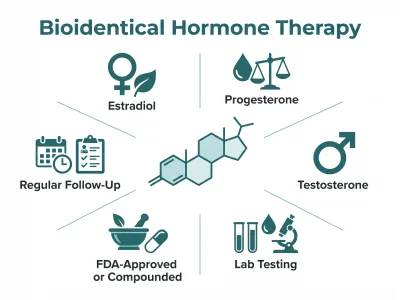
What Is Bioidentical Hormone Replacement Therapy?
Bioidentical hormones are substances that have exactly the same chemical and molecular structure as hormones produced in the human body. Bioidentical hormone replacement therapy, or BHRT, uses them to replace hormones your body is no longer making in the amounts you need.
The hormones most often discussed in BHRT are estrogen (usually estradiol), progesterone and testosterone. At Renew Integrative Health, hormone care can also include thyroid hormone and DHEA. Learn more on our DHEA and hypothyroidism vs hyperthyroidism pages.
FDA-Approved vs Compounded Bioidentical Hormones
“Bioidentical” describes the structure of a hormone, not whether it is approved. There are many FDA-approved hormone products that are bioidentical, such as the estradiol patch. FDA-approved hormone medicines include estrogen patches, gels, pills and vaginal products, and progesterone (Prometrium), which is usually taken with estrogen to lower the risk of endometrial cancer in women who still have a uterus. Compounded bioidentical hormones are mixed by a pharmacy for an individual patient. They are not FDA-approved, their dose and purity can be inconsistent, and little or no scientific evidence supports claims that they are safer or work better.
We use a combination of FDA-approved and compounded hormones, depending on what fits each patient, and we explain why we are choosing one over the other for your situation.
Andrea Dean, CRNP, explains BHRT options, costs and what really matters when you decide, in this YouTube Short.
What BHRT Is Used For
Menopause
Menopause is the time in your life when your menstrual periods stop. Hormone therapy for menopause involves taking estrogen, with or without progesterone or a similar progestin, to replace some of the hormones your body no longer makes. It may relieve hot flashes, night sweats, mood changes, vaginal dryness and pain during sex, and it may also help protect against osteoporosis.
You have reached menopause when you have not had a period for 12 months, and the time leading up to it is called perimenopause. The most common age for reaching menopause is between 45 and 55. Common symptoms include irregular periods, hot flashes and night sweats, trouble sleeping, mood changes and vaginal dryness. Lower estrogen after menopause can also weaken bones and raise cholesterol, increasing the risk of osteoporosis, heart disease and stroke.
If you still have your uterus, estrogen alone raises the risk of endometrial cancer, and adding a progestin lowers that risk. Hormone therapy comes in several forms, including pills, skin patches, gels or sprays, and vaginal creams, tablets or rings.
Low Testosterone in Men
Hypogonadism means the testes make little or no hormones. In men it can cause decreased interest in sex, erectile problems, muscle loss, breast enlargement, loss of body hair, weakness, infertility and osteoporosis. Testing usually includes testosterone, FSH and LH levels, and results in older men or men with obesity can be hard to interpret, so a hormone specialist may review them. FDA-approved testosterone products are approved for men who lack testosterone or have low testosterone levels, and they come as a topical gel, a skin patch, a buccal system or an injection. Many forms of hypogonadism are treatable and have a good outlook. Testosterone labeling has been updated several times, most recently in 2026, which is one reason testing and follow-up matter.
Testosterone for Women
When testosterone is part of a woman’s plan at Renew, it is compounded, usually as a cream or a troche, a tablet you hold under your tongue to dissolve. FDA-approved testosterone products are approved for men.
PMS and Painful Periods
Premenstrual syndrome (PMS) causes symptoms in the second half of the menstrual cycle, such as bloating, breast tenderness, food cravings, headache, mood swings, irritability, fatigue and sleep changes. Standard PMS care includes regular exercise, a balanced diet with less salt and sugar, pain relievers such as ibuprofen, and for severe symptoms, antidepressants called SSRIs. Birth control pills can make symptoms better or worse. Read more on our painful periods page.
Benefits and Limits of Hormone Therapy
The benefits of hormone therapy listed by health agencies are for menopause: relief of hot flashes, night sweats, mood changes and vaginal dryness, and help protecting against osteoporosis. For custom-compounded hormones, little or no scientific evidence supports claims that they work better.
Is BHRT Safer Than Synthetic Hormones?
There is no evidence that compounded “bioidentical hormones” are safe and effective, and they have not been shown to be safer or more effective than FDA-approved hormone therapy.
Non-Hormone Options
Hormones are not the only path. Lifestyle steps that can help with menopause symptoms include dressing in layers, limiting alcohol, spicy foods and caffeine, quitting smoking, keeping a healthy weight, regular exercise, good sleep habits and stress reduction. Non-hormone medicines can help with hot flashes, bone loss and vaginal dryness, and cognitive behavioral therapy can help with sleep. Research on supplements and “natural” creams is mixed and long-term safety information is limited, so check with us before trying them.
Saliva Hormone Testing
Some programs claim that saliva tests can guide custom hormone doses, but those claims are not supported by scientific data. Blood work, your symptoms and your health history guide dosing decisions at Renew, and your symptoms matter as much as your lab numbers.
BHRT Risks and Side Effects
Hormone therapy for menopause may increase the risk of blood clots, heart attack, stroke, breast cancer and gallbladder disease, and dementia has been listed as a possible serious risk in women 65 and older. Your level of risk depends on the type of hormone therapy, how long you use it, your medical history and your lifestyle.
Who Should Not Use Hormone Therapy
Hormone therapy is not recommended if you are or may be pregnant, have unexplained vaginal bleeding, or have had certain cancers, a stroke or heart attack, blood clots, a bleeding disorder, liver disease or an allergy to hormone medicine. Your full health history, including any family history of these conditions, is reviewed before you start.
Testosterone Risks
Testosterone gels and creams can harm women and children who touch the skin where they were applied, so let the product dry, cover the area with clothing and wash your hands afterward. Higher-than-directed doses may cause heart problems, including heart attack and heart failure, and testosterone has been linked to strokes, liver problems, mood changes and lower sperm production. Report leg pain or swelling, sudden shortness of breath or chest pain right away.
Using the Lowest Dose That Helps
It is usually recommended to use hormone therapy at the lowest dose that helps and for the shortest time needed. Check-ins are typically every three to six months at first, then spaced further apart once your levels and symptoms are stable. If a hormone plan comes with a year of medicine and no follow-up labs, that is a red flag.


What to Expect From BHRT at Renew
BHRT at Renew Integrative Health is individualized. Your plan may use FDA-approved hormones, compounded hormones or a combination, and we ensure proper dosing with follow-up testing and evaluation every few months, then less often once you are stable. Hormones usually take about 12 weeks to stabilize in your body.
Compounded bioidentical hormones are not FDA-approved, so insurance does not cover them. Some FDA-approved options, such as the estradiol patch, are often covered by insurance, and ordering a 60- or 90-day supply of a compounded medicine can lower its cost.
How to Prepare for Your BHRT Appointment
Before your first visit, complete your medical history, diet log and current symptoms through our patient portal. Please include the previous two years of medical testing, including diagnostic studies such as ultrasound, thermography and bone scans if applicable. Your initial consultation includes an extensive history, including family history, and a physical examination. We discuss the risks and benefits of hormone therapy and decide together whether it is appropriate for you.
BHRT FAQs
Is BHRT FDA Approved?
Some bioidentical hormones are FDA-approved, such as estradiol patches. Custom-compounded bioidentical hormones are not FDA-approved, which is why insurance does not cover them.
Are Bioidentical Hormones Safer Than Synthetic Hormones?
There is no evidence that compounded bioidentical hormones are safer or more effective than FDA-approved hormone therapy.
What Hormones Are Used in BHRT?
Estrogen (usually estradiol), progesterone and testosterone are the most common. Hormone care at Renew can also include thyroid hormone and DHEA, depending on your labs and symptoms.
Can Men Get BHRT?
Yes. FDA-approved testosterone products are approved for men who lack testosterone or have low levels. Testing and follow-up are part of any testosterone plan.
Can Hormone Therapy Help Perimenopause?
Perimenopause, the time leading up to menopause, can bring irregular periods, hot flashes, night sweats, trouble sleeping and mood changes. Hormone therapy may relieve hot flashes and night sweats, and lifestyle changes and non-hormone medicines are options too. Your provider weighs the benefits and risks with you.
How Long Can You Stay on Hormone Therapy?
There is no single answer. The lowest dose that helps, for the shortest time needed, is usually recommended, with regular check-ins to review your symptoms, risks and labs.
Does Insurance Cover BHRT?
Compounded bioidentical hormones are not covered by insurance because they are not FDA-approved. Some FDA-approved bioidentical options, such as the estradiol patch, are often covered.
What Should I Ask Before Starting Hormone Therapy?
Good questions include: Are hormones right for me, and why? What are the benefits, serious risks and common side effects? How long should I use hormone therapy? What is the lowest dose that will work? Are there non-hormone medicines I can take?
Where Can I Get BHRT Near Me?
If you are looking for bioidentical hormone replacement therapy near Newark or elsewhere in Delaware, Renew Integrative Health can help. Our holistic medicine practitioner, Andrea Dean, CRNP, reviews your symptoms, labs and history and explains every option, FDA-approved and compounded.
Looking for BHRT in Newark or elsewhere in Delaware? Our nurse practitioner can review your symptoms and lab work and walk you through your hormone therapy options. Book your consultation below.