


Hashimoto's Thyroiditis: Symptoms, Causes and Treatment
Hashimoto’s disease, also called Hashimoto’s thyroiditis, is an autoimmune disorder in which the immune system makes antibodies that damage the thyroid gland. It is the most common cause of an underactive thyroid, called hypothyroidism. Women are 4 to 10 times more likely than men to have it, and it most often develops between ages 30 and 50. Many people have no symptoms at first. As thyroid hormone falls, fatigue, weight gain, feeling cold, joint pain, dry skin and heavy periods can appear. Hashimoto’s is diagnosed with blood tests for TSH, thyroid hormone and TPO antibodies, and hypothyroidism caused by it is treated with daily levothyroxine.
What Is Hashimoto’s Disease?
Hashimoto’s disease is an autoimmune disorder that most often causes hypothyroidism, or an underactive thyroid. It is also called Hashimoto’s thyroiditis, chronic lymphocytic thyroiditis or autoimmune thyroiditis. In Hashimoto’s, your immune system makes antibodies, including thyroid peroxidase (TPO) and thyroglobulin antibodies, that damage the thyroid and cause inflammation.
Your thyroid is a small, butterfly-shaped gland in the front of your neck. Its hormones control the way your body uses energy, so when the gland is damaged and makes too little hormone, many body functions slow down. Hashimoto’s often progresses very slowly over many years, and some people have high antibody levels with normal thyroid hormone levels for a long time.
Hashimoto’s vs Hypothyroidism
Hashimoto’s and hypothyroidism are related but not the same. Hashimoto’s is the autoimmune disease, and hypothyroidism is the low thyroid hormone it can cause. Hashimoto’s is the most common cause of hypothyroidism, which affects about 5 in 100 Americans. Rarely, early in the disease, thyroid damage releases too much hormone and causes symptoms of an overactive thyroid. Learn how the two conditions compare on our hypothyroidism vs hyperthyroidism page.
Andrea Dean, CRNP, shares four changes she would make after a Hashimoto’s diagnosis in this YouTube Short.
Hashimoto’s Disease Symptoms
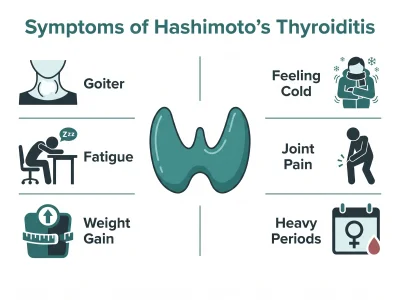
Many people with Hashimoto’s have no symptoms for years. The first sign is often an enlarged thyroid, called a goiter, which can make the front of your neck look swollen or give you a feeling of fullness in your throat. A goiter usually does not hurt, and it may shrink after many years.
As thyroid damage slowly lowers your hormone levels, you may notice symptoms of hypothyroidism:
- Fatigue
- Weight gain
- Trouble tolerating cold
- Joint and muscle pain
- Constipation
- Dry skin or thinning hair
- Heavy or irregular periods, or fertility problems
- Slowed heart rate
- Depression
Hypothyroidism develops slowly, so these symptoms may not appear for months or even years, and they can be easy to miss. Because fatigue and weight gain have many possible causes, symptoms alone cannot confirm Hashimoto’s. At Renew, Andrea also reviews stress and cortisol alongside your thyroid labs, so the full picture of how you feel is part of your visit.
Hashimoto’s Disease in Women
Hashimoto’s affects women far more often than men, and too little thyroid hormone can lead to irregular cycles or heavier periods. Almost half of women with hypothyroidism caused by Hashimoto’s had trouble getting pregnant, mostly those who were recently diagnosed or not yet treated. That is why women who have trouble getting pregnant are often tested for thyroid problems.
Some women develop thyroid problems in the first year after giving birth. This often starts with a brief overactive phase lasting 2 to 4 months, followed by an underactive phase that can last up to a year and needs treatment. Thyroid function usually returns to normal.
Complications of Untreated Hashimoto’s
When hypothyroidism from Hashimoto’s is not treated, it can lead to high cholesterol, heart disease and heart failure, and high blood pressure. Rarely, it causes myxedema, a life-threatening slowing of body functions that needs emergency care.
What Causes Hashimoto’s Thyroiditis?
The exact cause of Hashimoto’s disease is unknown. A family history of thyroid disease is common, and researchers believe genes and other factors, such as viruses like hepatitis C, may play a role.
Some things can cause or worsen hypothyroidism in people with Hashimoto’s:
- Too much iodine from kelp, other seaweed, iodine supplements, iodine-rich medicines or some cough syrups
- Certain medicines, including some used for bipolar disorder and other mental health conditions, and some heart rhythm medicines that contain iodine
- Toxins such as nuclear radiation
Who Is More Likely to Get Hashimoto’s?
You are more likely to develop Hashimoto’s disease if you:
- Are a woman, since women are 4 to 10 times more likely than men to have it
- Are between ages 30 and 50, although it can start in teens and young women
- Have a family member with Hashimoto’s or another thyroid disease
- Have another autoimmune disorder, such as celiac disease, lupus, rheumatoid arthritis, Sjögren’s syndrome or type 1 diabetes
If you live with one of these autoimmune conditions, tell your provider about any new fatigue, weight change or neck swelling, so your thyroid can be checked.
How Hashimoto’s Is Diagnosed
Diagnosis starts with your medical history and a physical exam, including checking your neck for a goiter. Blood tests then confirm whether your thyroid is affected and why.
Thyroid Blood Tests
- TSH: The best first test of thyroid function. A high TSH suggests an underactive thyroid.
- Free T4: Measures the thyroid hormone available to your tissues. Paired with TSH, it gives a more accurate picture.
- T3: Rarely helpful in hypothyroidism, because it is the last test to become abnormal.
- TPO antibodies: Present in most people with Hashimoto’s. A positive result in someone with hypothyroidism points to Hashimoto’s as the cause.
What Positive Thyroid Antibodies Mean
More than 1 in 10 people have thyroid antibodies with normal thyroid function, and antibodies alone do not cause hypothyroidism. If your antibodies are high but your thyroid hormone levels are normal, you do not need thyroid hormone medicine, but your TSH should be checked over time, because low hormone levels may develop. Following antibody levels over time is not useful for tracking the disease or your treatment. TSH and free T4 do that job.
Thyroid Ultrasound
An ultrasound may be used if Hashimoto’s is suspected but TPO antibodies are absent. It can show inflammation, sometimes even before hormone levels change, and it can rule out other causes of an enlarged thyroid, such as nodules. Other tests are usually not needed to confirm the diagnosis.


Hashimoto’s Treatment
Treatment depends on whether your thyroid is damaged enough to cause hypothyroidism. If it is not, your provider may simply monitor your symptoms and hormone levels. With a slightly elevated TSH, called mild or subclinical hypothyroidism, you may or may not need medicine right away, and TSH may be checked once or twice a year.
Taking Levothyroxine
When Hashimoto’s causes hypothyroidism, the recommended treatment is levothyroxine, a synthetic version of the T4 hormone your thyroid makes. It comes as a pill, liquid or soft gel capsule. Take it on an empty stomach, usually 30 to 60 minutes before your first meal. Grapefruit juice, espresso, soy and multivitamins that contain iron or calcium can reduce how well it is absorbed.
A blood test is done about 6 to 8 weeks after you start and after each dose change, then about every 6 months, and then yearly once your dose is stable. Symptoms can take several months to improve. Most people with hypothyroidism from Hashimoto’s need lifelong treatment. Taking too much thyroid hormone can cause atrial fibrillation or osteoporosis, so never change your dose without talking with your provider.
Other medicines and supplements can affect thyroid pills, including calcium or iron supplements, antacids, biotin, estrogen and some seizure medicines. Tell us whenever you start or stop one of them, so your dose can be checked. With the right dose, hypothyroidism can usually be fully controlled, and you should never stop taking your thyroid medicine without talking with your provider first.
Iodine, Diet and Supplements
Your thyroid needs iodine to make hormones, but people with Hashimoto’s may be sensitive to too much. Large amounts from kelp, seaweed, iodine supplements or some cough syrups may cause or worsen hypothyroidism. Vitamin D and selenium are being studied for Hashimoto’s, but there is no specific guidance on them yet. Talk with us before starting any supplement.
Hashimoto’s and Pregnancy
Untreated or poorly treated hypothyroidism from Hashimoto’s can raise the risk of miscarriage, birth defects, preeclampsia, placental abruption and bleeding after birth. It can also lead to premature birth, low birth weight and stillbirth. You may need a higher levothyroxine dose during pregnancy, with levels checked every 6 to 8 weeks, and the dose usually returns to your pre-pregnancy level after birth. Small amounts of levothyroxine pass into breast milk, but this will not harm your baby. You need enough iodine for your baby’s development, but too much can cause a goiter in the baby, so talk with your provider about how much is right for you.
Hashimoto’s Thyroiditis FAQs
How Serious Is Hashimoto’s Disease?
Hashimoto’s is a long-term condition, but hypothyroidism caused by it is treatable with daily medicine. Left untreated, it can contribute to high cholesterol, heart disease, high blood pressure and, rarely, myxedema.
Can Hashimoto’s Be Cured?
Hashimoto’s is treated rather than cured. Most people with hypothyroidism from Hashimoto’s take levothyroxine for life, and once the dose is right, levels are checked less often.
Can Hashimoto’s Cause an Overactive Thyroid?
Rarely. Early in the disease, thyroid damage can release too much hormone and cause symptoms of an overactive thyroid. Over time, Hashimoto’s most often leads to an underactive thyroid.
Do Positive Thyroid Antibodies Mean I Need Medicine?
Not on their own. More than 1 in 10 people have thyroid antibodies with normal thyroid function. If your hormone levels are normal, regular TSH checks are used to watch for changes.
Is There a Hashimoto’s Diet?
No specific diet cures Hashimoto’s. The most important diet step is avoiding large amounts of iodine from seaweed, kelp and iodine supplements. If you also have celiac disease, which raises your risk of Hashimoto’s, a gluten-free diet is the treatment for your celiac disease.
How Is Hashimoto’s Different From Graves’ Disease?
Both are autoimmune thyroid diseases. Hashimoto’s most often makes the thyroid underactive, while Graves’ disease is the most common cause of an overactive thyroid.
Where Can I Get Help for Hashimoto’s Near Me?
If you are looking for Hashimoto’s care in Newark or elsewhere in Delaware, Renew Integrative Health can help. Our board certified functional medicine nurse practitioner, Andrea Dean, CRNP, will review your symptoms, labs and history with you and talk through your options.
Ready to talk about your thyroid? Our nurse practitioner in Newark, Delaware, can review your symptoms and lab work with you and help you plan your next steps. Book your consultation below.