


Cortisol: Symptoms, Testing & Treatment
Cortisol (hydrocortisone) is your body’s primary stress hormone, produced by the adrenal glands to regulate blood sugar, inflammation, sleep cycles and your response to stress. When cortisol is balanced you feel energized in the morning and calm by evening. When it is not, whether running too high, too low or at the wrong times, the effects show up as stubborn weight around the midsection, 3AM wakeups, persistent anxiety and a fatigue that sleep does not fix. Cortisol levels follow a natural daily rhythm called the diurnal curve, peaking in the morning and dropping through the day. Disruption of this pattern, through chronic stress, poor sleep or blood sugar instability, is what drives the symptoms most people associate with cortisol imbalance.
What Is Cortisol and What Does It Do?
Cortisol is your body’s primary stress hormone, but calling it that understates what it actually does. It is a steroid hormone produced by the adrenal glands that touches nearly every system in your body, from your metabolism and immune function to your mood, memory and reproductive hormones. Understanding what cortisol is, where it comes from and how it is supposed to behave is the foundation for understanding why it goes wrong.
Where Cortisol Is Made
Cortisol is produced in the adrenal glands, two small triangular glands that sit on top of your kidneys. More specifically, it is made in the outer layer of the adrenal gland called the adrenal cortex, in a zone known as the zona fasciculata. The adrenal glands receive a signal from the brain – first from the hypothalamus, then from the pituitary gland – telling them how much cortisol to release. This communication pathway is called the HPA axis, short for hypothalamic-pituitary-adrenal axis, and it is the central nervous system’s stress management command center.
What does Cortisol Controls in Your Body
Cortisol is not simply a stress hormone. It is a master regulator that touches nearly every system in your body. It raises blood sugar when your cells need fuel, reduces inflammation when your immune system overreacts, regulates blood pressure, controls how your body metabolizes fat, protein and carbohydrates, and modulates the activity of your immune system. It also influences your mood, memory and ability to focus. Because cortisol levels affect estrogen, progesterone, testosterone and DHEA through a shared hormonal pathway, a cortisol problem rarely stays contained to one symptom – it tends to pull other hormones off course with it.
Andrea Dean, CRNP breaks down what cortisol actually does and why imbalance affects your sleep, weight and hormones.
The Cortisol Rhythm
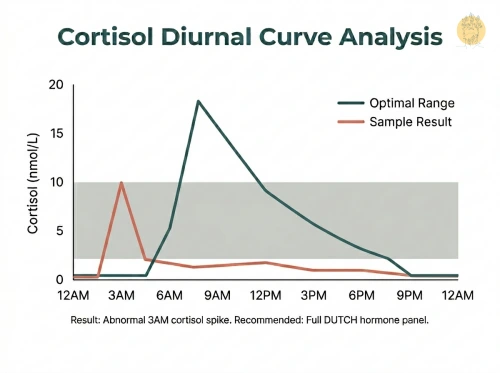
Cortisol follows a predictable daily pattern called the diurnal curve. Levels peak sharply in the first 30 to 45 minutes after waking – a normal response called the cortisol awakening response – then gradually decline through the day, reaching their lowest point around midnight. This rhythm is what gives you energy in the morning, keeps you alert through the afternoon and allows your body to wind down for sleep at night.
When this rhythm is disrupted – flattened, inverted or spiking at the wrong times – the consequences show up in ways that are easy to mistake for other conditions. Waking at 3AM, crashing at 2PM, feeling wired at 10PM when you should be winding down, and struggling to get going in the morning despite a full night of sleep are all signs the cortisol rhythm has shifted. A single morning blood test misses all of this. It captures one point on the curve and calls it a day.
Signs and Symptoms of High Cortisol
High cortisol is the version most people have heard about. Chronic stress, poor sleep and blood sugar swings are among the most common drivers, and the symptoms tend to build gradually until they are hard to ignore. What makes high cortisol tricky is that many of its signs overlap with other conditions, which is why it often goes unaddressed for years.
Physical Symptoms of High Cortisol
The body is remarkably consistent in how it responds to chronically elevated cortisol levels. The most recognizable physical signs of high cortisol include:
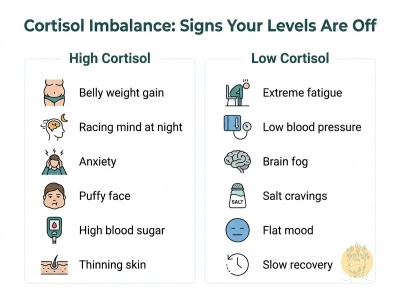
- Weight gain around the abdomen and lower back that does not respond to diet or exercise
- A rounded, puffy face, sometimes called cortisol face
- Thinning skin that bruises easily
- Slow wound healing
- High blood sugar or worsening insulin resistance
- High blood pressure
- Frequent infections from a suppressed immune system
These physical changes happen because cortisol in excess breaks down muscle tissue for fuel, promotes fat storage in the midsection and keeps blood sugar chronically elevated.
Emotional and Mental Symptoms
Cortisol has a direct effect on the brain, particularly the hippocampus and prefrontal cortex. Chronically elevated levels shrink the hippocampus over time, which affects memory and emotional regulation. Common mental and emotional symptoms of high cortisol include:
- Anxiety that feels constant or disproportionate to circumstances
- Irritability and mood swings
- Brain fog and difficulty concentrating
- Depression or a persistent flat feeling
- Racing thoughts especially at night
- Feeling wired but exhausted at the same time
High Cortisol Symptoms in Women
Symptoms of high cortisol in females often show up in the hormonal system first. Because cortisol competes with progesterone for the same receptor sites and steals from the pregnenolone pool that feeds sex hormone production, women with high cortisol frequently experience irregular or absent periods, worsening PMS, low libido, and accelerated symptoms of perimenopause. Thyroid function is also vulnerable, which is why high cortisol and Hashimoto’s so often appear together.
Waking Up at 3AM – The Cortisol Spike Signal
Waking between 2AM and 4AM and being unable to fall back asleep is one of the most specific patterns associated with cortisol spike at night. In a healthy cortisol rhythm, levels are at their lowest around midnight and begin rising gradually toward morning. In a dysregulated pattern, cortisol can surge prematurely in the early hours, triggering a stress response that pulls you out of deep sleep. Blood sugar drops overnight and a cortisol spike follows, which is why eating a small protein-based snack before bed sometimes resolves the pattern entirely. If this is a regular occurrence for you, it is worth investigating your full cortisol curve rather than treating it as insomnia.
Signs and Symptoms of Low Cortisol
Low cortisol is the side of this conversation most people never hear about. While high cortisol gets most of the attention, chronically low cortisol is increasingly common and just as disruptive. It tends to develop after years of HPA axis overdrive when the adrenal glands have been pushed to their limit and output begins to drop. The result is a body that cannot generate the energy or stress response it needs to function normally.
Why Chronic Stress Can Cause Low Cortisol
There is a common assumption that stressed people always have high cortisol. That is not accurate. Chronic stress initially drives cortisol up, but over months or years of sustained pressure, poor sleep and inadequate recovery, the HPA axis can begin to downregulate. The hypothalamus and pituitary reduce their signaling to protect the system, and adrenal output drops below the optimal range. This pattern, sometimes called HPA axis dysfunction, is what many people mean when they refer to adrenal fatigue. The result is a cortisol curve that is flat, low and unresponsive rather than high and reactive.
Common low cortisol symptoms include:
- Profound fatigue that does not improve with rest
- Difficulty getting out of bed in the morning despite sleeping
- Low blood pressure and dizziness when standing
- Salt and sugar cravings
- A flat or depressed mood with little emotional range
- Slow recovery from illness, exercise or stress
- Sensitivity to cold
- Brain fog and poor memory
Low Cortisol vs High Cortisol – How to Tell the Difference
The symptom overlap between high cortisol and low cortisol levels makes self-diagnosis unreliable. Both can cause fatigue, mood changes and brain fog. The key differences tend to be in the pattern. High cortisol typically comes with anxiety, weight gain around the midsection, wired-but-tired energy and disrupted sleep from excess stimulation. Low cortisol tends to present as flat exhaustion, an inability to mount a stress response, salt cravings and a feeling of being completely emptied out rather than wound up.
The only reliable way to distinguish between them is testing. A single morning blood draw can catch severe cases of either but misses the nuance entirely. The DUTCH test maps the full diurnal curve and metabolite patterns, giving a complete picture of whether cortisol is too high, too low, or dysregulated in timing regardless of the absolute number.
What Actually Causes Cortisol Imbalance
Cortisol does not become dysregulated randomly. There are identifiable drivers behind every pattern, and understanding them is what separates a functional medicine approach from simply treating the number.
The HPA Axis – Your Stress Response System
The HPA axis is the command chain that controls cortisol output. When your brain perceives a threat, the hypothalamus releases CRH, which signals the pituitary to release ACTH, which tells the adrenal glands to produce cortisol. This system was designed for short-term survival. The problem is the brain cannot distinguish between a physical threat and a psychological one, so work deadlines, poor sleep and inflammatory foods all activate the same pathway as genuine danger. When that signal never turns off, the HPA axis stays chronically activated until it eventually dysregulates. Disruption of the ACTH-cortisol feedback loop is the central mechanism behind most cortisol imbalance conditions.
Lifestyle Triggers That Dysregulate Cortisol
- Chronic sleep deprivation
- Blood sugar instability
- Overtraining without recovery
- High caffeine intake
- Chronic low-grade inflammation
- Prolonged psychological stress
The Cortisol-Hormone Connection
Cortisol shares a common precursor with the sex hormones called pregnenolone. Under chronic stress the body prioritizes cortisol production over everything else, a process sometimes called pregnenolone steal. This is why cortisol dysregulation so often appears alongside low DHEA, low progesterone and thyroid dysfunction. Cortisol also directly suppresses thyroid hormone conversion, which is why women with Hashimoto’s so frequently have adrenal involvement as well. At Renew, hormone testing maps cortisol alongside the other hormones it affects so nothing is missed.
How to Test Your Cortisol Levels
Testing is where the functional medicine approach to cortisol separates itself most clearly from conventional care. The test you get matters as much as the result you receive.
Conventional Cortisol Testing – Morning Blood Draw
The standard conventional approach is a single morning cortisol blood test drawn between 7AM and 9AM. This captures cortisol at its daily peak and is useful for ruling out severe conditions like Cushing syndrome or Addison’s disease at the extremes of the range. What it cannot tell you is what your cortisol does for the other 23 hours of the day. A result that falls within the broad conventional reference range gets flagged as normal even when the pattern is clearly dysregulated. Many people with significant cortisol imbalance are told their levels are fine based on this single snapshot.
The DUTCH Test – What Functional Medicine Uses
The DUTCH test (Dried Urine Test for Comprehensive Hormones) is the gold standard for functional cortisol assessment. Rather than a single blood draw, the DUTCH test uses four urine collection points throughout the day and evening to map the full diurnal cortisol curve. It also measures cortisol metabolites, which reveal how efficiently the body is clearing cortisol, and free cortisol versus bound cortisol, which reflects how much is biologically active. DUTCH test participating patients in Delaware at Renew Integrative Health receive a full interpretation of their results alongside the rest of their hormone panel, so cortisol is never assessed in isolation.
What Your Cortisol Results Actually Mean
Functional medicine uses narrower, more clinically meaningful reference ranges than conventional labs. A morning cortisol of 10 nmol/L might fall within a conventional lab’s normal range while still being suboptimal for energy, immune function and hormonal balance. At Renew, results are interpreted against functional ranges and assessed alongside sleep patterns, symptoms and the full hormone picture. The goal is not to find a number that avoids a diagnosis. It is to find the pattern that explains your symptoms.
Andrea offers comprehensive cortisol testing in Newark, Delaware and virtually for patients across all 50 states. Book a consultation to get started.

How to Lower Cortisol Naturally
Lowering cortisol is not about suppressing a hormone your body needs. It is about removing what is keeping it dysregulated and giving the HPA axis the conditions it needs to self-correct. The most effective interventions are also the least complicated.
Sleep
Sleep is the single most impactful lever for cortisol regulation. During deep sleep the body releases growth hormone, which directly opposes cortisol and drives tissue repair. Chronic sleep deprivation keeps cortisol elevated, disrupts the cortisol awakening response and accelerates HPA axis dysfunction. Prioritizing 7 to 9 hours of uninterrupted sleep, keeping consistent wake times and avoiding screens and bright light after 9PM are the foundational steps before any supplement or protocol is considered.
Supplements to Reduce Cortisol
- Ashwagandha – an adaptogen that helps modulate the HPA axis response. Note that ashwagandha raises or lowers cortisol depending on the individual baseline, which is why testing before supplementing matters.
- Phosphatidylserine – shown to blunt the cortisol response to physical and psychological stress.
- Magnesium glycinate – supports the parasympathetic nervous system and improves sleep quality.
- Vitamin D3 – low vitamin D is associated with elevated cortisol and poor HPA axis regulation.
- Rhodiola rosea – an adaptogen that supports stress resilience and reduces cortisol reactivity.
Supplements to reduce cortisol work best when the underlying triggers are addressed first. Taking adaptogens without identifying what is driving the dysregulation is guesswork.
Movement
Moderate movement lowers cortisol. Intense exercise raises it acutely. For someone with HPA axis dysregulation, a hard training session can worsen the cortisol pattern rather than help it. Walking, particularly outdoors, activates the parasympathetic nervous system and consistently produces cortisol-lowering effects without the cortisol spike that follows high-intensity training. Light to moderate exercise done consistently outperforms intense training for adrenal recovery.
Foods That Lower Cortisol
Diet has a direct and measurable effect on cortisol levels. Foods that support cortisol regulation include:
- Fatty fish, walnuts and flaxseed – omega-3 fatty acids reduce inflammatory cortisol triggers
- Dark leafy greens, nuts and seeds – magnesium supports the parasympathetic nervous system
- Eggs, legumes and whole grains – B vitamins support adrenal function and stress hormone metabolism
- Fermented foods and prebiotic fibre – gut health directly influences HPA axis signaling
- Berries and dark chocolate – polyphenols reduce oxidative stress that drives cortisol elevation
Foods that reliably raise cortisol triggering foods include refined sugar, alcohol, excess caffeine and ultra-processed foods. A Mediterranean-style eating pattern is consistently associated with lower cortisol output and better HPA axis resilience.
Common Cortisol Myths
TikTok and wellness culture have made cortisol one of the most talked-about hormones online. Unfortunately most of what circulates is either incomplete or flat wrong. Here are the five misconceptions that are found most often.
Myth: Cortisol Is a Bad Hormone That Should Be Eliminated
Cortisol is not the enemy. It is essential for survival. Without it you cannot regulate blood sugar, mount an immune response, sustain energy or recover from stress. The problem is never cortisol itself. It is a pattern that has gone off course, whether too high, too low or firing at the wrong times. The goal is always regulation, not elimination.
Myth: You Can Do a Cortisol Detox
The cortisol detox trend sells teas, supplements and 21-day challenges on the premise that you can flush cortisol out of your body. There is no clinical mechanism for this. Cortisol is produced continuously by the adrenal glands in response to signals from the brain. You cannot detox a hormone your body is actively making. What you can do is address the triggers keeping production elevated, which is a very different thing.
Myth: If You Are Stressed You Always Have High Cortisol
This is one of the most clinically important misconceptions to correct. Chronically stressed people frequently have low cortisol, not high. After prolonged HPA axis activation the system downregulates and output drops. Someone who has been running on empty for years may have a completely flat cortisol curve despite feeling perpetually stressed. Testing is the only way to know which pattern you are dealing with.
Myth: Intense Exercise Lowers Cortisol
Intense exercise acutely raises cortisol. For someone with a healthy HPA axis that spike is temporary and manageable. For someone with existing adrenal dysfunction, repeated high-intensity training sessions can worsen the pattern significantly. Walking, yoga and light resistance training are far more appropriate for adrenal recovery than HIIT or long endurance sessions.
Myth: Ashwagandha Always Lowers Cortisol
Ashwagandha is an adaptogen, meaning it modulates cortisol up or down depending on where your baseline sits. For someone with genuinely low cortisol, taking ashwagandha to lower it further can backfire. This is why the supplement-first approach without testing is problematic. Cortisol supplements should always follow a clear picture of what your levels are actually doing.
Frequently Asked Questions About Cortisol
How Do I Lower Cortisol Naturally?
The most effective natural approaches to lowering cortisol naturally are consistent sleep of 7 to 9 hours, a diet rich in magnesium, B vitamins and omega-3 fatty acids, moderate movement like walking over high-intensity training, and reducing the primary triggers including blood sugar instability and chronic inflammation. Adaptogens like ashwagandha and phosphatidylserine can support the process but work best after testing confirms elevated cortisol.
How Do I Test for High Cortisol?
The most comprehensive testing option for cortisol is the DUTCH test, which maps cortisol across four collection points throughout the day and measures metabolites for a full picture of the cortisol pattern. A conventional morning blood draw is available through most labs but captures only a single point on the curve and misses timing dysregulation entirely.
Is High Cortisol Dangerous?
Chronically elevated cortisol is associated with increased risk of insulin resistance, cardiovascular disease, osteoporosis, immune suppression and accelerated cognitive decline. Occasional cortisol spikes in response to acute stress are normal and not harmful. It is the sustained elevation over months and years that drives the most significant health consequences.
What Is a Normal Cortisol Level for a Woman?
Conventional morning cortisol reference ranges typically fall between 6 and 23 mcg/dL on a blood test. Functional medicine uses narrower ranges and assesses cortisol in the context of the full diurnal curve rather than a single number. What is considered optimal varies by time of day, age and the individual’s symptom picture.
What Does a Cortisol Spike Feel Like?
A cortisol spike typically feels like a sudden surge of alertness or anxiety, a racing heart, a feeling of being wired or on edge, and sometimes a flush of heat. When it happens at night, as in the 3AM pattern, it pulls you out of deep sleep with a sense of alertness that makes it difficult to fall back asleep despite feeling tired.
Why Do I Wake Up at 3AM and How Do I Stop It?
Waking between 2AM and 4AM is often driven by a premature cortisol surge combined with a blood sugar drop overnight. The body releases cortisol to raise blood sugar, and the resulting stress response pulls you out of sleep. A small protein-based snack before bed, consistent sleep and wake times, and addressing the underlying cortisol pattern through testing are the most reliable solutions.
When Is the Best Time to Test Cortisol?
For a conventional blood test, morning between 7AM and 9AM is standard as this captures the daily peak. For the DUTCH test, collections happen at four points across the day and evening, making timing of individual samples less critical than consistency with the collection instructions provided.