


Trauma: Types, Symptoms and Treatment
Trauma is the lasting effect of an event, a series of events or a set of circumstances that a person experiences as physically or emotionally harmful or life threatening. Common causes include violence and abuse, war, disasters and adversity in childhood. Fear after a frightening event is normal, and most people recover over time. When symptoms continue, they can include flashbacks, avoidance, being easily startled, trouble sleeping, guilt and detachment. Talk therapies that focus on the memory of the event are highly recommended for post-traumatic stress disorder (PTSD), and some medicines can help. Support from other people helps recovery. If you are in crisis, call or text 988.

Your story heard at your pace
Care that works with your team
In person or virtual visits
What Is Trauma?
Trauma is the lasting effect of an event, a series of events or a set of circumstances that a person experiences as physically or emotionally harmful or life threatening. It can affect your functioning and your mental, physical, social, emotional or spiritual well-being. It is common among adults and children, and especially common among people with mental health and substance use disorders. Reactions vary a great deal from person to person. Some people recover without lasting effects, and a strong support system, few earlier hard experiences and resilience can all lessen the impact.
This page explains the main types, the symptoms to watch for and how it is treated. For a broader look at anxiety, depression and related conditions, visit our behavioral health page.
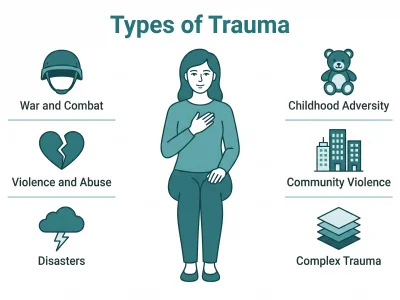
Types of Trauma
Common types of trauma include war and combat, sexual violence such as adult sexual assault or abuse, child sexual abuse and military sexual trauma, and other violence such as intimate partner violence, community violence and racial trauma. Disasters can also cause it, including natural and human-caused disasters, mass violence and public health emergencies.
Childhood Trauma
Adverse childhood experiences are potentially harmful events that occur in childhood, from birth to age 17. They include experiencing or witnessing violence, abuse or neglect, and household conditions that undermine a child’s sense of safety and stability, such as substance use, mental health problems, parental separation or a household member’s incarceration. They are common: three in four high school students reported at least one, and one in five reported four or more. Children are among the most vulnerable after disasters and other frightening events, and traumatic stress in a child occurs when the child feels intensely threatened by something they experience or witness.
The effects can reach well into adulthood. Toxic stress in childhood can affect brain development, the immune system and stress responses, and it is linked to a higher risk of depression, difficulty forming stable relationships and chronic diseases such as heart disease and diabetes. Safe, stable, nurturing relationships help prevent adverse childhood experiences and buffer the harm when they happen.
Trauma Symptoms and Signs
Fear after a frightening event is normal, and most people recover from their reactions over time. When symptoms continue, they tend to fall into four groups:
- Re-experiencing: flashbacks, recurring memories and upsetting dreams
- Avoidance: staying away from places, people or activities that remind you of the event
- Arousal and reactivity: being easily startled, irritability and trouble sleeping
- Negative changes in thoughts and mood: guilt, detachment from others and loss of interest in things you enjoyed
Emotional and Psychological Trauma
It is not only an emotional experience. Harmful experiences are linked to behavioral health problems and to chronic physical health conditions, especially when they happen in childhood, and to substance use, mental health conditions and difficulties in relationships and careers. If you also live with a long-term condition, our chronic illness page explains how the two can affect each other.
Trauma Response
Symptoms usually start within 3 months of the event, but they can appear later, sometimes after a long quiet period. Some people recover within 6 months, while others have symptoms for a year or more. Reactions vary from person to person, and a strong support system can lessen the impact.
When Trauma Becomes PTSD
Anyone can develop PTSD at any age, and about 6 in 100 people will have it at some point in their lives. Women are more likely than men to develop it. In adults, PTSD is diagnosed when symptoms last at least 1 month, include at least one re-experiencing symptom, one avoidance symptom, two arousal symptoms and two mood or thinking symptoms, and significantly interfere with daily life. Our behavioral health page puts PTSD alongside other common conditions.
Complex Trauma
Complex trauma, also called complex PTSD, is defined in the ICD-11 diagnostic system as meeting every requirement for PTSD plus severe and pervasive difficulty regulating emotions, persistent negative beliefs about yourself and difficulty sustaining relationships. It is linked most often to prolonged or repeated trauma that is difficult or impossible to escape, especially in early life, such as childhood abuse or domestic violence.
What Raises the Risk of Lasting Symptoms?
Not everyone who goes through something frightening develops lasting symptoms, and many people go on with their lives without them. Several things make lasting symptoms more likely: earlier trauma, especially in childhood, a lack of social support afterward, ongoing stressors, and a personal or family history of mental illness or substance use. These are risk factors, not destiny, and support from other people makes a real difference.
Trauma Treatment
No single treatment suits everyone, so you and your provider choose together based on your symptoms, history and preferences. The National Center for PTSD offers a treatment decision aid that can help you compare options before you decide, and it is worth bringing your questions to your first visit with us.
Trauma Therapy
Talk therapies that focus on the event are highly recommended for PTSD. They focus on your memory of the event and what it means to you, and most last about 3 months. The therapies with the most support are:
- Cognitive processing therapy: helps you change upsetting thoughts and feelings that followed the event
- Prolonged exposure: teaches you to approach memories, feelings and situations linked to the event that you have been avoiding
- Eye movement desensitization and reprocessing (EMDR): involves processing the memory while focusing on a back-and-forth movement or sound
Written exposure therapy, which uses writing assignments over 5 sessions, and cognitive therapy for PTSD are also supported. Present-centered therapy does not require discussing it in detail and focuses on handling current life problems linked to it. These therapies are delivered by trained mental health clinicians, and we work alongside the clinician you choose.
Medication for PTSD
Three medicines are recommended for PTSD: paroxetine, sertraline and venlafaxine, which are also used for symptoms of depression and anxiety. Benzodiazepines are not recommended because they do not help PTSD symptoms and can have serious side effects over time. If you try a medicine, you and your provider monitor your response and side effects and adjust the dose if needed.
Trauma Recovery and Support
Addressing it is an important part of healing and recovery. Trauma-informed care emphasizes safety, trust, collaboration and empowerment, and a strong support system lessens the impact. Everyday habits that help with stress and anxiety are listed on our behavioral health page.
When to Get Help Right Away
If you are struggling or thinking about harming yourself, call or text 988 or chat at 988lifeline.org to reach the 988 Suicide and Crisis Lifeline. In a life-threatening situation, call 911.


How We Care for Trauma at Renew
Care at Renew Integrative Health starts with listening. You set the pace, and you do not need to describe what happened in detail at your first visit. Your visit includes an extensive history, including family history, a physical examination and a review of past testing. We aim to follow the principles of trauma-informed care: safety, trust, collaboration and empowerment.
Because sleep, mood, energy and stress can be tied to what is happening in the rest of the body, we also look at physical contributors, such as thyroid health, hormones, nutrition and long-term illness, when they fit your history. We work alongside your therapist, psychiatrist and other clinicians, not instead of them, so your care stays coordinated, and we refer promptly when you need urgent or specialized mental health care.
How to Prepare for Your Appointment
Before your first visit, complete your medical history, diet log and current symptoms through our patient portal, along with the previous two years of medical testing. A short note on when your symptoms started, what makes them better or worse and any medicines or supplements you take is especially useful. We offer in-person visits at our Newark, Delaware office and virtual consultations across the United States.
Trauma FAQs
What Are the Most Common Types of Trauma?
War and combat, sexual violence, other violence such as intimate partner and community violence, and disaster events are common types. Adverse childhood experiences are another major group.
What Are the Signs of Trauma?
Signs fall into four groups: flashbacks and upsetting memories, avoiding reminders, being easily startled or having trouble sleeping, and guilt, detachment or loss of interest. Symptoms usually start within 3 months, but can begin later.
How Long Does a Trauma Response Last?
It varies. Some people recover within 6 months, while others have symptoms for a year or more.
What Is the Difference Between Trauma and PTSD?
Trauma is the lasting effect of a harmful event or circumstances. PTSD is a diagnosis for symptoms that last at least 1 month, follow a defined pattern and significantly interfere with daily life.
What Is the Best Therapy for Trauma?
No single treatment suits everyone. Cognitive processing therapy, prolonged exposure and EMDR have the most support, and most last about 3 months.
Can Childhood Adversity Affect Adult Health?
Yes. Adverse childhood experiences are linked to a higher risk of depression, injury and chronic diseases such as heart disease and diabetes, and they can affect relationships, education and work well into adulthood. Safe, stable, nurturing relationships help protect children.
Where Can I Find Trauma Care Near Me?
Looking for support near Newark, Delaware, or a virtual visit from anywhere in the United States? Our holistic medicine practitioner, Andrea Dean, CRNP, reviews your history, symptoms and testing and builds a plan around you.
Looking for trauma support in Newark, Delaware, or a virtual visit from anywhere in the United States? Our nurse practitioner can listen to your story and review your history and options with you. Book your consultation below.