


Joint Pain: Causes, Symptoms and Treatment
Joint pain is pain, stiffness or swelling where two or more bones meet, such as the knees, hips, shoulders and knuckles. Arthritis is a common cause, and about 1 in 5 US adults has it. Other causes include injuries such as sprains and strains, overuse conditions such as bursitis and tendinitis, and autoimmune diseases such as lupus. Symptoms include pain, stiffness, swelling, redness and a joint that feels unstable. Treatment depends on the cause and can include exercise, weight management, medicines, injections, braces or surgery. See a provider for severe pain, swelling, numbness or a joint you cannot put weight on.

Your whole history, not one joint
Care that works with your team
In person or virtual visits
What Is Joint Pain?
Joints are the places where two or more bones meet, such as the shoulders, knees and knuckles, and they include the cartilage, tendons and ligaments that cushion and support them. Problems in any of these structures cause pain, stiffness or swelling. They can come on suddenly after an injury or build slowly over years, and it can affect one joint or several.
This page covers the most common causes, the symptoms to watch for, how problems are diagnosed and what treatment looks like. For sudden injuries such as fractures and sprains, visit our orthopedic injuries page.
How Common Is Arthritis?
About 1 in 5 US adults has arthritis, roughly 54 million people, and it is a leading cause of work disability. There are more than 100 types, including osteoarthritis, rheumatoid arthritis and gout, and the number is expected to rise as the population grows and ages. People with obesity, diabetes or heart disease often have arthritis too.
Joint Pain Symptoms
Symptoms vary with the cause, but common signs of a joint problem include:
- Pain in or around a joint
- Stiffness
- Redness and swelling
- Numbness
- A joint that feels unstable or loose
- Not being able to put weight on the joint
Swelling and Warmth
Swelling, warmth and tenderness around a joint are typical of inflammatory conditions such as rheumatoid arthritis, while osteoarthritis tends to cause pain with joint use that eases with rest. Either way, a joint that swells after an injury, or that keeps swelling, should be checked.
Joint Stiffness
Morning stiffness is a useful clue. In osteoarthritis it usually lasts under 30 minutes, while in rheumatoid arthritis stiffness lasts longer than 30 minutes after waking or after a long period of rest. Stiffness that returns after you sit for a while is worth mentioning to your provider.
Hand, Knee and Hip Pain
Osteoarthritis most often affects the hands, knees, hips, neck and lower back, and its symptoms often start slowly in one or a few joints. Rheumatoid arthritis commonly affects the wrists, hands and feet, and the symptoms often happen on both sides of the body. Long-lasting pain in the joints can also bring fatigue, sleep problems and low mood, so it is worth treating the whole picture.
When to See a Provider
See a provider for significant pain, swelling or numbness, a joint you cannot put weight on, pain from an old injury that is getting worse or swelling more, or a joint that feels unstable or abnormal. A dislocation is a medical emergency.
What Causes Joint Pain?
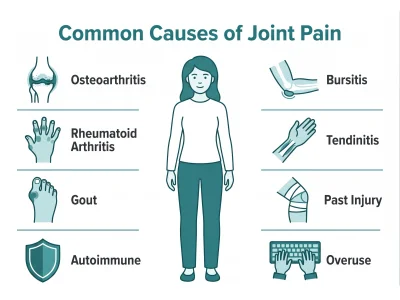
Most joint problems come from one of three groups of causes: arthritis, autoimmune disease, or an injury or overuse. Hormone changes can play a part too, and joint aches are common in perimenopause and menopause, which our menopause page covers.
Osteoarthritis
Osteoarthritis is a degenerative joint disease in which joint tissues break down over time, and it is the most common type of arthritis. Anyone can get it, but it becomes more common with age, and women are more likely than men to develop it, especially after age 50. Risk factors include aging, being overweight or obese, a past joint injury or surgery, repetitive overuse, joints that did not form correctly and a family history. Younger people may develop it after a joint injury.
Rheumatoid Arthritis
Rheumatoid arthritis is a chronic autoimmune disease in which the immune system attacks the joint lining, causing pain, swelling, stiffness and loss of function. It can also cause fatigue, an occasional low-grade fever and loss of appetite. Risk factors include age, being female, family history, smoking and obesity, and current treatments can help people lead productive lives, with remission as the goal.
Gout and Other Causes
Gout is one of the common types of arthritis. Autoimmune diseases can affect the joints too: lupus can cause joint and muscle pain, and Sjögren’s disease often causes aching joints along with dry eyes and mouth. If your symptoms began after a tick bite, our Lyme disease page explains how Lyme can affect the joints.
Injuries and Overuse
Sudden injuries such as sprains, strains and dislocations can hurt a joint, as can overuse. Bursitis, tendinitis and chronic strain often come from repeated movements, such as playing an instrument or doing carpentry. Our orthopedic injuries page covers these in depth.
Joint Pain Treatment
Treatment depends on the cause. The goals of treatment are to reduce pain and other symptoms, improve joint function, slow the disease and help prevent disability. Surgery, including partial or total joint replacement, is considered when other treatments are not helping and joint damage is extensive.
How Joint Problems Are Diagnosed
There is no single test for osteoarthritis. Diagnosis uses your medical history, a physical exam and imaging or lab work when needed. X-rays show lost joint space, bone damage and bone spurs, although early damage often does not appear on them. An MRI shows soft tissue damage and is most useful for a joint that is locking or giving out. Blood tests and joint fluid samples help rule out other causes, such as infection or gout.
Joint Pain Relief at Home
The basics matter. Exercise can ease pain and stiffness and build flexibility, strength and endurance, so start slowly and check with your provider or a physical therapist first. Good options include stretching, strength training with weights or bands, water exercise and low-impact activity such as walking, cycling, swimming or tai chi. Losing weight, if needed, reduces stress on the joints, especially the knees and hips. Learning self-management skills, protecting your joints and seeing a provider early help too.
For overuse injuries, rest, raising the joint above the heart, anti-inflammatory medicine and gentle exercise can help. Massage may increase blood flow and warmth, and some research suggests acupuncture may relieve osteoarthritis pain. Talk with your provider before trying these.
Cortisone Injections
Corticosteroid injections, often called cortisone injections, are injected into the joint for temporary pain relief. They are potent medicines, so your provider decides how many injections you get and how often.
Hyaluronic Acid Injections
Hyaluronic acid injections, also called viscosupplements, are injected into the knee and are sometimes recommended for knee osteoarthritis only. They replace a component of joint fluid involved in lubrication and nutrition.
Stem Cell and Exosome Injections
The FDA warns that no stem cell or exosome product has been approved for any orthopedic condition, including osteoarthritis, tendonitis and knee pain, and some of these products may have significant safety issues. If a clinic offers one, ask whether it needs FDA approval and whether it has it, and report any harm to the FDA’s MedWatch program.


How We Care for Joint Pain at Renew
Care at Renew Integrative Health starts with your story: which joints hurt, when the pain started, what makes it better or worse and what you have already tried. Your first visit includes an extensive history, including family history, a physical examination and a review of past testing and imaging.
From there, we look for the reasons behind your pain, including injury, inflammation, hormones, nutrition, weight, sleep and stress, and build a plan around what you can change and what needs treatment. We work alongside your orthopedic specialists, rheumatologists and physical therapists, not instead of them, and we refer promptly when a joint needs imaging, an injection or surgery. Other services we offer include IV nutrient therapy, peptide therapy, regenerative medicine and bioidentical hormone therapy, and you are welcome to ask what the evidence does and does not show for each.
How to Prepare for Your Appointment
Before your first visit, complete your medical history, diet log and current symptoms through our patient portal, along with the previous two years of medical testing. Bring any x-ray or MRI reports and a short note on which joints hurt, when the pain is worst and what helps. We offer in-person visits at our Newark, Delaware office and virtual consultations across the United States.
Joint Pain FAQs
What Is the Most Common Cause of Joint Problems?
Arthritis, and osteoarthritis is the most common type. Injuries and overuse, such as sprains, bursitis and tendinitis, are also common causes.
What Is the Difference Between Osteoarthritis and Rheumatoid Arthritis?
Osteoarthritis is a degenerative breakdown of joint tissues, with pain that comes with joint use and eases with rest and morning stiffness that usually lasts under 30 minutes. Rheumatoid arthritis is an autoimmune disease, often affects both sides of the body and causes stiffness that lasts longer than 30 minutes.
When Should I See a Provider?
See a provider for significant pain, swelling or numbness, a joint you cannot put weight on or one that feels unstable, or pain from an old injury that is getting worse. A dislocation needs emergency care.
Can Exercise Help Joint Pain?
Yes. Exercise can ease pain and stiffness and build flexibility and strength. Start slowly and check with your provider or a physical therapist first.
Can Losing Weight Help My Joints?
If you are carrying extra weight, losing some can reduce stress on your joints, ease pain, lower the chance of further injury and improve mobility. The benefit is greatest for weight-bearing joints such as the knees and hips.
Are Stem Cell or Exosome Injections Approved for Joints?
No. No stem cell or exosome product has been approved by the FDA for any orthopedic condition. Ask any clinic offering them whether the product is FDA-approved.
Where Can I Find Joint Pain Treatment Near Me?
Looking for help near Newark, Delaware, or a virtual visit from anywhere in the United States? Our holistic medicine practitioner, Andrea Dean, CRNP, reviews your history, symptoms and testing and builds a plan around you.
Looking for joint pain treatment in Newark, Delaware, or a virtual visit from anywhere in the United States? Our nurse practitioner can review your history, symptoms and past testing with you. Book your consultation below.